McAze logo

Interior Painting in Toronto & the GTA

Interior Painting

McAze provides interior painting for houses, townhomes, condominiums and renovation projects with careful protection, surface repair, sanding, priming, clean application and detailed final touchups.

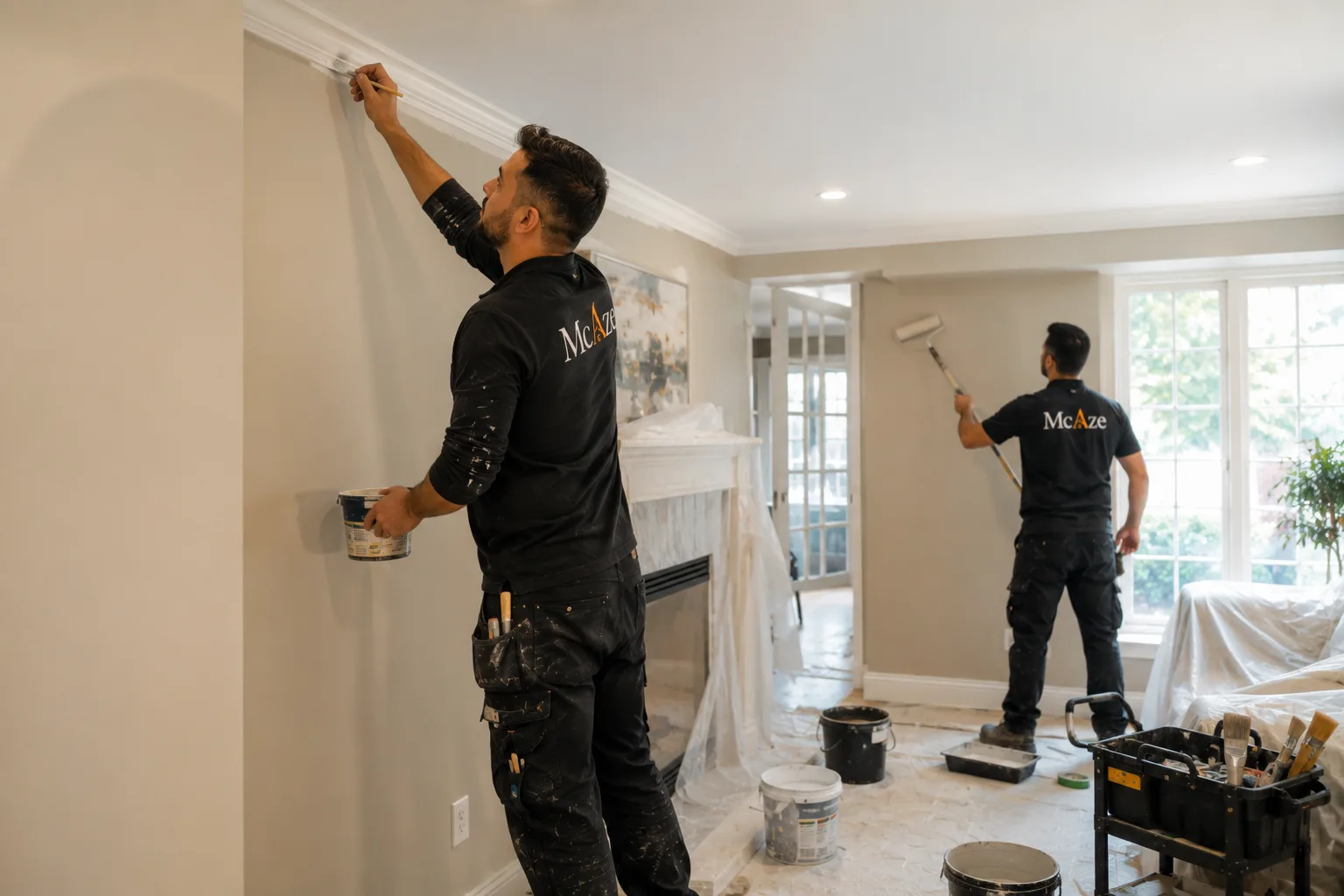
Interior Painting — McAze renovation and construction

Planning Guide

What should homeowners know before hiring an interior painter?

A successful interior paint job is built on decisions that happen before the first finish coat. Wall and ceiling condition, previous coatings, stains, drywall repairs, caulking, trim, colour changes, sheen, ventilation, furniture and access all affect the scope. Fresh paint can make a room feel complete, but it cannot hide movement, moisture or poorly prepared repairs for long.

McAze provides interior painting across Toronto and the Greater Toronto Area as a stand-alone refresh or part of a larger renovation. The work can include walls, ceilings, doors, baseboards, window trim, stair components, closets and selected cabinetry or millwork where the substrate and coating system are appropriate. Every proposal is adjusted to the actual home rather than based only on floor area.

The questions below reflect recurring searches from Toronto homeowners and the practical decisions that should be resolved before work begins. They explain what influences price and timing, why preparation matters, how products are selected and what a professional written painting scope should include.

Budget planning

How much does interior painting cost in Toronto?

Interior painting prices vary because the visible room size is only one part of the labour. An estimate may include moving or covering furniture, protecting floors, removing hardware, washing surfaces, filling holes, repairing drywall, caulking gaps, sanding, spot priming, applying full primer, painting ceilings, walls, trim and doors, and completing cleanup and touchups. A furnished older home with damaged plaster is a different project from an empty condo with sound walls.

Colour and finish choices also affect the work. A dramatic colour change, a deep accent colour, a high-contrast trim package or a surface with uneven porosity may require primer or additional coats. Stairwells, tall ceilings, detailed mouldings, closets, built-ins and many doors add time even when the floor area is modest. Restricted condominium hours, parking and elevator access can influence logistics.

McAze prepares a written estimate after reviewing the rooms and intended finish. Homeowners should compare the same scope—not only a price per square foot. One quote may cover walls only, while another includes preparation, ceilings, trim, doors, specified products, coat assumptions and final cleanup.

  • Rooms, ceiling heights and access
  • Wall, ceiling and trim condition
  • Drywall, plaster and caulking repairs
  • Existing and selected colours
  • Primer and number of finish coats
  • Doors, closets, stairs and millwork
  • Furniture movement and floor protection
  • Condo rules, parking and work hours

Project timeline

How long does it take to paint a room or an entire house?

A straightforward empty room can move quickly, while a whole occupied home with repairs, trim and colour changes requires a staged schedule. The complete timeline includes protection and room setup, repairs, drying, sanding, dust removal, primer, finish coats, curing between coats, detail work, cleanup and final review. Product recoat times and site temperature or humidity must be respected.

The number of painters is not the only factor. Crowding too many people into small rooms can reduce efficiency, and later trades can damage finished paint. Whole-home projects are usually sequenced so occupants retain safe access and completed areas are not used as dusty travel routes. Stairwells, kitchens, bathrooms and millwork often require their own plan.

McAze confirms a practical schedule after the site review and colour selections. The homeowner should know when rooms must be cleared, when they can be used carefully and when the coating is expected to reach a more durable cure—not only when it feels dry to the touch.

Written scope

What should be included in an interior painting estimate?

A useful estimate identifies the rooms and surfaces: walls, ceilings, closets, baseboards, crown moulding, window trim, doors, frames, stairs or other components. It should describe expected preparation, repair assumptions, primer, paint manufacturer or product level, colours or sheen schedule, anticipated coats, protection, furniture responsibilities, cleanup and exclusions.

The proposal should also explain how concealed or uncertain conditions will be handled. Water staining may need investigation before coating. Wallpaper removal can reveal damaged drywall. Older trim may have multiple brittle layers. A fixed price that silently assumes perfect surfaces is difficult to compare with a scope that acknowledges these risks.

McAze uses the walkthrough to separate cosmetic painting from repairs and specialty work. Clear allowances or approval steps reduce surprises and give the homeowner a record of what the finish is expected to cover.

  • Exact rooms and painted surfaces
  • Cleaning, patching, sanding and caulking
  • Primer type and application areas
  • Paint products, colours and sheen
  • Coat and coverage assumptions
  • Protection and furniture responsibilities
  • Repairs, exclusions and change approval
  • Schedule, cleanup and final walkthrough

Surface preparation

Why is wall preparation important before painting?

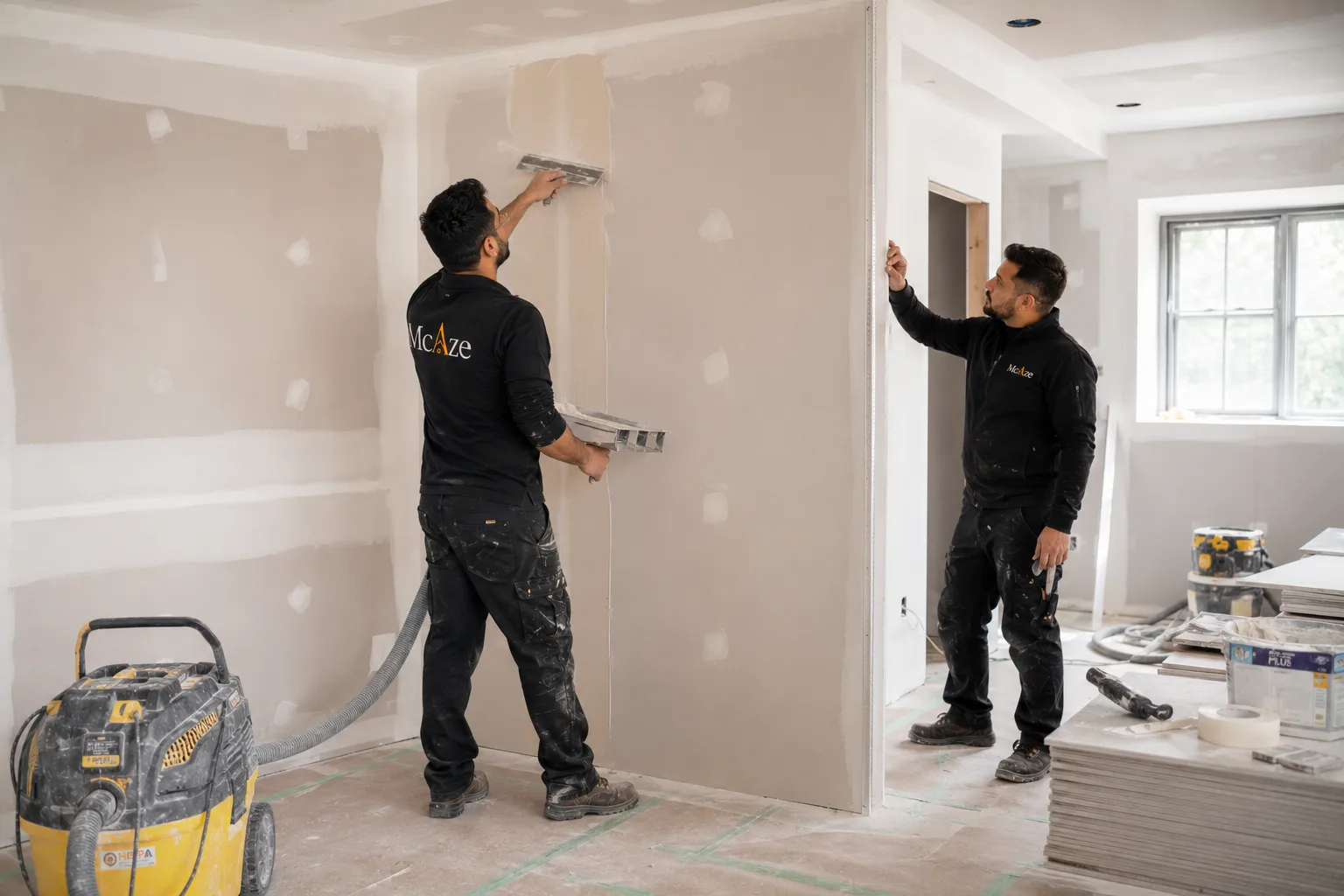
Paint follows the surface beneath it. Dust, grease, loose coating, glossy areas, ridges and poorly feathered patches can remain visible after an expensive finish coat. Preparation may include cleaning, scraping unstable material, opening and filling defects, sanding edges, removing dust, caulking appropriate joints and priming repaired or porous areas.

Preparation should match the defect. A nail hole and a recurring crack are not the same problem. A stain needs a different response from ordinary scuffing, and peeling paint must be traced to adhesion or moisture conditions. Excessive sanding can damage drywall paper or create unnecessary dust, while insufficient sanding can leave visible edges and poor adhesion.

McAze reviews surfaces under normal and directional light before painting. The agreed finish level and existing condition guide the repair scope. This preparation is often the largest difference between a quick colour change and a result that looks consistent when daylight crosses the wall.

Repairs

Should drywall cracks, nail pops and holes be repaired before painting?

Visible defects should be assessed before paint is applied. Small holes and stable surface damage can often be filled, sanded and primed. Nail pops may need the board secured before the fastener area is repaired. Cracks at joints or corners can indicate movement, failed tape or a recurring condition that simple filler will not solve.

The repair boundary matters. A small patch may disappear under a low-sheen finish after proper feathering, while a large repair or strong side lighting can require a broader skim area for a uniform appearance. Texture matching on ceilings and walls also needs to be discussed because a local repair may remain visible even when the colour matches.

McAze can coordinate appropriate drywall preparation with the painting scope. Structural movement, active leakage, widespread failure or suspected hazardous materials may require further assessment before cosmetic work proceeds.

Moisture and stains

Can you paint over water stains or peeling paint?

A water stain should not be treated as a decorating problem until the source is understood. Roof, plumbing, condensation, window or bathroom moisture can continue behind a new coating. The affected material must be dry and sufficiently sound, and damaged drywall, plaster, trim or insulation may need repair or replacement.

Once the cause is resolved, staining may require a compatible stain-blocking primer before finish paint. Peeling areas need loose material removed and edges prepared, but the coating will fail again if moisture, contamination or an incompatible underlying layer remains. Painting over active mould or damp material is not a repair.

McAze documents visible staining during the estimate and defines what can be confirmed before opening the surface. Where the cause or extent is uncertain, investigation is addressed before the final decorative system is applied.

Primer selection

When does an interior wall need primer?

Primer is used to create a suitable base; it is not automatically required over every sound painted wall. New drywall compound, bare drywall paper, porous plaster, raw wood, repaired areas, stains, strong colour changes and difficult existing coatings may need a specific primer or bonding step. Spot priming and full priming serve different purposes.

The primer must match both the substrate and the finish coat. A general-purpose water-based product is not a universal stain blocker, and a strong specialty primer may bring odour, ventilation or application requirements that need planning. Manufacturer instructions determine compatibility and recoat timing.

McAze selects preparation and primer after reviewing the surface. The objective is even absorption, adhesion and stain control—not adding a layer simply because the word primer sounds reassuring.

Coverage

Do interior walls always need two coats of paint?

Two finish coats are common, but coverage depends on the existing colour, new colour, product, substrate, application rate and required appearance. A similar colour over a clean, sound surface may cover differently from white over deep red or a vivid colour over patched drywall. Some strong colours use a tinted base and may need a planned primer or additional application.

Coat count should not be separated from preparation. Applying more paint does not flatten ridges, stabilize peeling material or block every stain. Products also have specified spread rates and recoat times; stretching paint too far can reduce uniformity and performance.

McAze defines reasonable coat assumptions in the written scope and reviews coverage as work progresses. The goal is an even approved finish, with any unusual colour or substrate requirement discussed before it becomes an unexpected change.

Finish selection

Which paint sheen is best for walls, ceilings, kitchens and trim?

Sheen affects appearance, cleanability and how strongly the surface reflects defects. Flat or matte finishes are often selected for ceilings and lower-traffic walls because they reduce glare. Eggshell or other washable low-sheen products are common on living-area walls. Kitchens, bathrooms, hallways and children's rooms may benefit from more durable formulations suited to repeated cleaning.

Trim and doors often use a harder, smoother finish with more sheen, but product technology matters as much as the label. Higher sheen can emphasize dents, brush marks and uneven repairs. A washable matte product may suit a wall better than a traditional higher-sheen coating if the manufacturer approves the use.

McAze creates a room-by-room finish schedule based on traffic, moisture, cleaning, lighting and existing surface quality. Colour samples should be reviewed in the selected sheen because the same colour can appear different as reflectivity changes.

Colour planning

How should homeowners choose interior paint colours?

Colour should be tested in the actual room. Natural light changes by direction and time of day, while warm and cool artificial lighting can shift undertones after sunset. Flooring, cabinets, counters, fabrics and fixed stone or tile should be considered together rather than choosing a wall colour from an isolated chip.

Large sample areas or removable sample boards give a better impression than a small card. Review the colour beside trim and in both bright and shadowed areas. Open-concept homes also need transition planning so a colour does not stop at an arbitrary corner or conflict with a connected hall.

McAze records approved colour names, codes, locations and sheen before application. Final colour approval remains with the client, and documenting it helps avoid confusion when several whites, accents or trim finishes are used throughout the home.

Indoor air quality

What does low-VOC paint mean, and should the home be ventilated?

Volatile organic compounds, or VOCs, can be released by paints, varnishes, adhesives and other household products. Health Canada recommends choosing low-emission products when possible and increasing ventilation when using paints and similar materials. Odour alone is not a complete measure of what may be present in indoor air.

Product labels and safety instructions should be followed. Windows can be opened when outdoor conditions are suitable, and functioning mechanical ventilation may support air exchange. Children, seniors, pregnant people and people with asthma or other health conditions can be more sensitive and may need additional planning or temporary separation from the work area.

Low-VOC does not eliminate the need for protection, ventilation or cure time. McAze reviews the selected products, room use and household circumstances so occupants understand access expectations during and after application.

Read Health Canada guidance on VOCs and indoor ventilation

Older homes

What precautions are needed before sanding old paint?

Older painted surfaces should not be aggressively disturbed without considering what the existing layers may contain. Health Canada's Healthy Home Guide notes that lead may be present in old paint and that painting over an intact layer can be acceptable when it is not disturbed. Sanding, scraping or demolition changes the risk because it can create dust and debris.

Age alone does not confirm a hazardous coating, and appearance is not a reliable test. Where the history or condition creates concern, testing or qualified guidance should be considered before preparation begins. Children and pregnant people require particular care around potential lead exposure.

McAze treats suspected hazardous materials as a scope and safety issue rather than ordinary patching. Work may pause for testing or specialist recommendations, and protection and disposal requirements must be resolved before decorative painting continues.

Review Health Canada's Healthy Home Guide

Site protection

How are floors, furniture and occupied rooms protected during painting?

Protection begins with a clear responsibility plan. Furniture may be removed, grouped and covered depending on the room and scope. Floors need suitable coverings secured without damaging their finish, while fixtures, hardware, counters and adjacent surfaces are masked or removed as appropriate. Travel paths and material storage areas also need protection.

Dust control matters during sanding and repair, not only while paint is applied. Local extraction, containment, vacuuming and surface cleaning help keep residue away from finished rooms. Wet tools and open coatings require a controlled work zone, especially around children and pets.

McAze includes setup, daily housekeeping and final cleanup in the planned workflow. The site is reviewed at the end for paint edges, hardware, coverings, touchups and debris so the homeowner receives a usable room rather than a painted room surrounded by unfinished cleanup.

Occupied homes

Can interior painting be completed while you live in the house?

Many painting projects can be completed while the home remains occupied. The sequence should preserve safe paths to bedrooms, kitchens and bathrooms and account for children, pets, remote work and scent sensitivity. Rooms need to be available long enough for preparation, application, ventilation and initial drying.

Whole-home work may be divided into zones, although repeated setup and furniture movement can extend the schedule. Occupants should avoid touching soft coatings or returning items to shelves and walls too early. Specialty primers or coatings may justify temporary absence even when ordinary low-emission wall paint would not.

McAze confirms working hours, keys or access, daily shutdown, ventilation and room-release expectations before work starts. This makes the project more predictable without promising that every area can remain continuously available.

Condominium projects

What should condo owners check before interior painting?

Condominium painting may require property-management approval even when the work is cosmetic. Buildings can regulate contractor insurance, working hours, parking, elevator reservations, corridor protection, material movement and waste disposal. Sprinklers, common-area doors and other building-controlled components should not be painted without authorization.

The owner should obtain the current renovation rules before scheduling. Furniture layout and limited storage can affect the room sequence, while neighbours may be sensitive to sanding noise or odour. Colour obligations should also be checked in rental or resale situations where an owner has separate commitments.

McAze plans the work around the approved access window and building requirements. Confirming these details before paint and labour are booked helps prevent delays at the loading area or suite door.

Permits and scope

Do you need a building permit for interior painting in Toronto?

Cosmetic repainting by itself is generally different from a regulated interior alteration. The answer changes when the larger project includes structural changes, new openings, plumbing, HVAC, fire separations or other work governed by permits and trade requirements. Painting should not be used to conceal work that still needs inspection.

The City of Toronto publishes an Interior Alterations guide for residential renovation scopes that require a building permit. Homeowners planning more than paint should confirm the complete project rather than treating each finish in isolation. Condominium approval and municipal permit requirements are separate matters.

McAze reviews painting in the context of the renovation. If the scope is limited to preparation and coatings, the proposal reflects that. If walls, systems or layouts are changing, permit and professional responsibilities are identified as part of the wider plan.

Review the City of Toronto Interior Alterations guide

Renovation sequencing

Should painting happen before or after flooring and other renovation work?

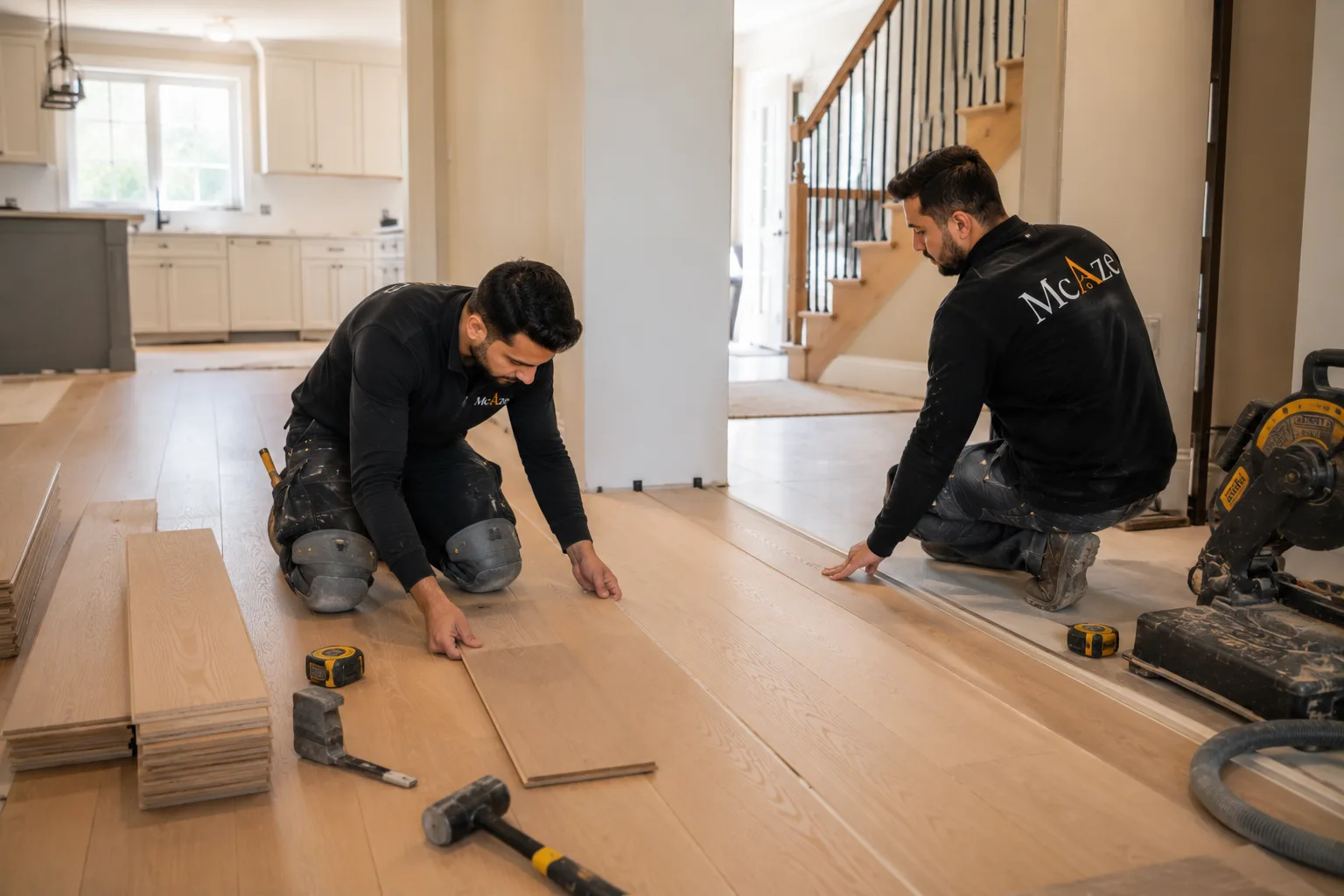
Painting is coordinated with dusty and damage-prone work rather than assigned one universal position. Major demolition, framing, mechanical work and drywall finishing normally occur first. Ceilings and walls may be primed and painted before new flooring to reduce risk, while baseboards, doors and final touchups may follow flooring and trim installation.

Site-finished hardwood, cabinet installation, countertops and electrical fixtures each influence the sequence. Sanding floors after final wall paint can create dust and marking; installing flooring after completed baseboards can require extra trim detailing. The right plan reduces repeated protection and avoids forcing one trade to damage another's work.

McAze coordinates painting with drywall, flooring, carpentry, kitchens, bathrooms and electrical finishing. The project schedule identifies initial coats, trim stages and final touchups so the last impression is clean and complete.

Contractor selection

How do you choose an interior painting contractor in Toronto?

Choose a contractor who describes preparation as clearly as colour. The proposal should identify surfaces, repairs, primer, products, coats, protection, exclusions, schedule and cleanup. Ask how water stains, recurring cracks, wallpaper, damaged drywall and unexpected old coatings will be handled before authorizing extra work.

Insurance, property requirements and communication are also important. The team should explain access, daily shutdown, material storage and ventilation. References or real project examples are more useful when they show comparable occupied homes, multi-level work or coordinated repairs rather than only close-up photos of wet paint.

McAze connects painting to the wider condition of the home. The objective is not to sell the greatest number of coats; it is to define the preparation and coating system needed for a consistent, maintainable finish.

  • Are every room and surface listed?
  • Is preparation described in writing?
  • Are paint products and sheen identified?
  • Are primer and coat assumptions clear?
  • Who moves furniture and protects floors?
  • How are extra repairs approved?
  • What cleanup and touchups are included?
  • Are schedule and access expectations realistic?

McAze workflow

How does the McAze interior painting process work?

The process begins with a site review of rooms, surfaces, lighting, access and known defects. McAze discusses colours, sheen, furniture, household needs and connected renovation work. The resulting written estimate defines included areas, preparation, products, assumptions and exclusions.

Before painting, approved colours and materials are confirmed. Work areas and travel paths are protected, hardware is managed according to scope, and surfaces are cleaned and repaired. Sanded areas are dusted, appropriate primer is applied and finish coats follow product requirements and the agreed sequence.

The final stage includes detail work, removal of protection, cleanup and a walkthrough under normal lighting. Approved touchups are completed and leftover labelled paint or colour information can be retained for future maintenance. McAze then reviews initial care and room-use expectations with the homeowner.

  • Site review and surface assessment
  • Written scope and colour schedule
  • Furniture, floor and access protection
  • Cleaning, repairs, sanding and caulking
  • Primer and finish-coat application
  • Trim, edges and coordinated touchups
  • Cleanup, walkthrough and care guidance

Service area

Where does McAze provide interior painting services?

McAze provides interior painting and coordinated renovation services across Toronto and the Greater Toronto Area, including Vaughan, Markham, Richmond Hill, North York, Mississauga and nearby communities, subject to project scope and availability.

The work can range from selected rooms and post-repair painting to full townhouses, condominiums and whole-home renovation finishes. Property type affects access, protection, scheduling and approval requirements, so the estimate is based on the actual site.

To request an estimate, provide the property location, rooms, approximate timing, desired surfaces, known repairs, occupancy, condominium rules and photographs showing walls, ceilings, trim and access. McAze can then recommend the next practical step.

Frequently Asked Questions

What else do homeowners ask about interior painting?

Does McAze provide a written interior painting estimate?+

Yes. The estimate identifies included rooms and surfaces, preparation assumptions, primer, paint products, coat assumptions, protection, cleanup and exclusions.

Can McAze repair drywall before painting?+

Yes, when included in the agreed scope. Small holes, stable cracks and damaged areas can be prepared appropriately, while movement, moisture or extensive failure may require further assessment.

Can you paint an occupied home?+

Often yes. McAze plans room access, furniture, protection, ventilation, children, pets and daily cleanup so the household understands which areas remain available.

Does McAze paint condominium interiors?+

Yes, subject to the building's renovation rules, contractor requirements, work hours, parking, elevator bookings, protection and waste procedures.

Do you paint ceilings, trim and doors?+

These surfaces can be included in the written scope. Their condition, preparation, primer, product and sheen are reviewed separately from the walls.

Where does McAze provide interior painting?+

McAze serves Toronto and GTA communities including Vaughan, Markham, Richmond Hill, North York and Mississauga, subject to scope and availability.

Are you planning interior painting in Toronto or the GTA?

Tell McAze about the rooms, surface condition, colours, occupied areas and timing to begin a practical painting scope and written estimate.

Get Free Estimate