McAze logo

Landscaping Services in Toronto & the GTA

Landscaping

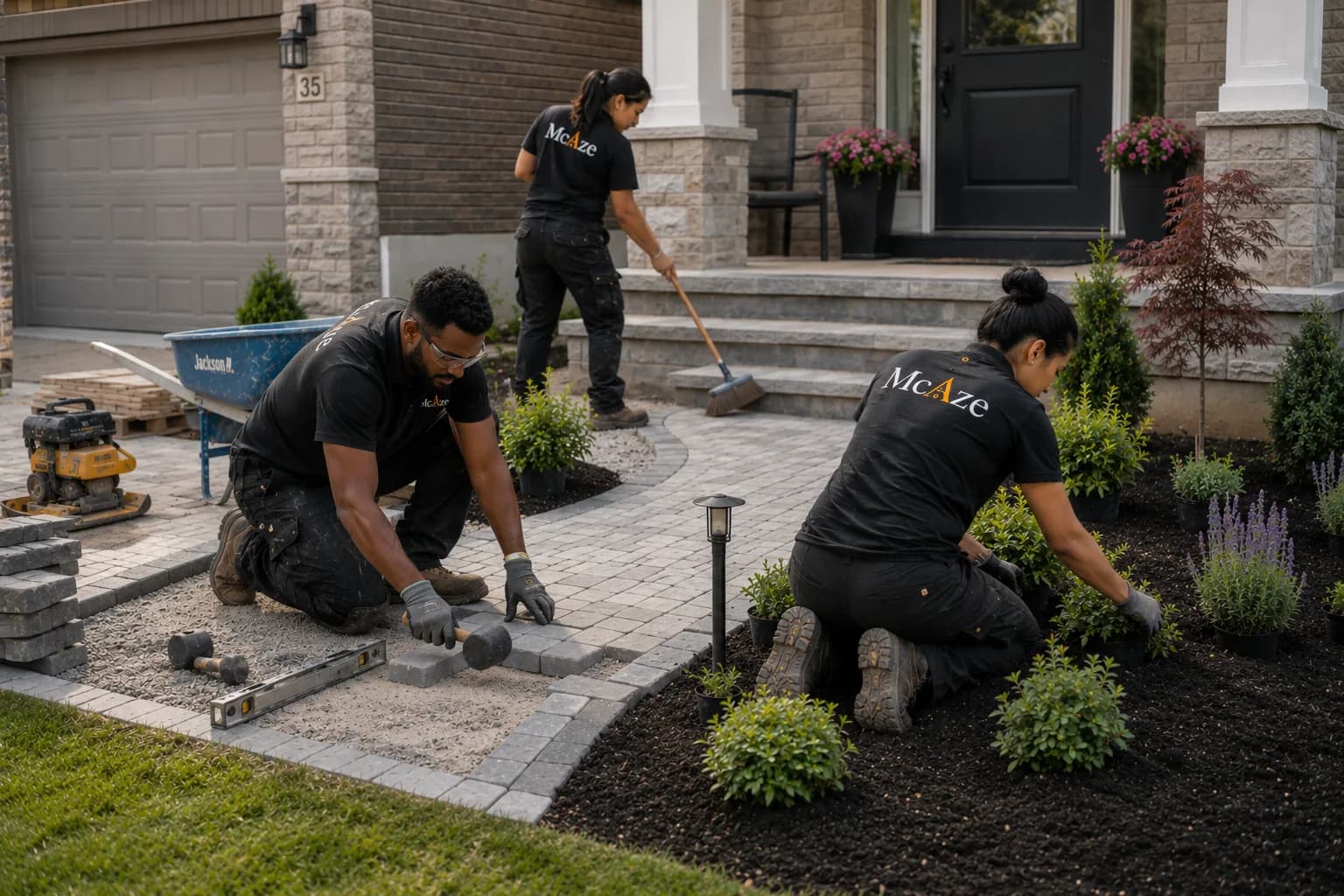
McAze creates practical residential landscapes with organized walkways, planting beds, grading awareness, cleaner edges and durable exterior details planned around the home and everyday maintenance.

Landscaping — McAze renovation and construction

Planning Guide

What should homeowners plan before starting landscaping work?

Landscaping changes more than curb appeal. It affects how water moves, how people reach the house, how much maintenance the yard needs and whether trees, fences, foundations and neighbouring properties remain protected. Good landscaping begins with site conditions and use before plants, stone colours or decorative features are selected.

McAze provides practical landscaping improvements across Toronto and the Greater Toronto Area. Depending on the property, work can include cleanup, garden-bed preparation, edging, planting coordination, sod, mulch, walkways, interlock repairs, surface improvements and grading-aware exterior organization. Complex drainage design, engineered retaining structures, irrigation, arboriculture and regulated tree work are coordinated separately where required.

The guide below answers common Toronto landscaping questions about cost, design, grading, drainage, interlock, plants, sod, low-maintenance yards, native species, tree protection, permits, seasonal timing and contractor selection. It helps property owners define a scope that improves the yard without creating water or maintenance problems elsewhere.

Budget planning

How much does landscaping cost in Toronto?

Landscaping cost depends on the existing site and the work below the visible finish. A proposal may include design coordination, removal, excavation, soil, aggregate, compaction, grading, edging, plants, sod, mulch, pavers, steps, drainage components, delivery, disposal and restoration. Two yards of the same size can have different budgets when one has direct access and the other requires every material to pass through a narrow side yard.

Plant size, paver type, excavation depth, base preparation and retaining conditions influence cost. Heavy materials, roots, buried concrete, poor soil and drainage corrections can add work that photographs do not show. Phased landscaping may be practical when essential drainage and access work are completed before decorative planting.

McAze prepares a written estimate based on a defined scope and site review. Homeowners should compare quantities, base preparation, plant sizes, disposal and exclusions rather than one total alone. A low surface-only price may not include the preparation that keeps the result stable.

  • Removal, excavation and debris disposal
  • Access for equipment and material delivery
  • Soil, aggregate and base preparation
  • Grading and drainage considerations
  • Pavers, edging, sod, mulch and plants
  • Steps, fences and deck transitions
  • Tree protection and regulated work
  • Cleanup, restoration and maintenance guidance

Landscape planning

Do you need a landscape design before construction?

A design is valuable whenever several elements must fit together. It can show walkways, patios, planting beds, lawn, storage, gates, downspouts, trees, grades and future deck or fence work. Even a simple measured sketch reduces conflicts and makes quantities easier to compare.

More complex sites may need a landscape architect, grading consultant, engineer, arborist or other qualified professional. Retaining walls, major elevation changes, ravine properties, protected trees and permit-related work should not be improvised from a decorative concept.

McAze matches planning effort to project risk. The goal is enough information to price and build responsibly without turning a focused improvement into unnecessary design work.

Drainage

Can landscaping fix water pooling in a yard?

Sometimes, but the source and outlet must be understood first. Local low spots, compacted soil, blocked swales, downspouts and settled paving can contribute to ponding. Water may also come from neighbouring grades, groundwater, foundation conditions or overloaded drainage systems that a surface adjustment alone cannot solve.

A repair should direct water toward an appropriate lawful outlet without creating a new problem for neighbours, sidewalks or the house. Simply raising soil against the foundation or sending a pipe to the property line can increase risk. Serious or unclear drainage conditions may require qualified design.

Toronto states that owners must maintain catch basins, drains, ditches and swales and manage water responsibly on their property. McAze reviews practical surface conditions and separates ordinary grading work from drainage problems requiring specialist assessment.

Review Toronto's grading and drainage guidance

Grading

Can you change the grade around a Toronto home?

Small surface corrections can be part of landscaping, but major elevation changes affect drainage, foundations, trees and neighbouring properties. Existing swales and positive outlets should not be blocked. New hard surfaces also change how quickly water runs off.

Infill and permit-related projects can require a formal grading plan and certification. Toronto's infill guidance emphasizes maintaining the intended drainage pattern and avoiding new ponding on the subject or adjacent properties. An ordinary contractor should not replace a required grading consultant.

McAze documents existing flow clues and limits grade changes to the confirmed scope. Where measurements or professional design are required, they are established before soil or pavers make the condition harder to reverse.

Read Toronto's lot-grading requirements for infill housing

Interlock

Why do interlocking pavers sink or become uneven?

Pavers can move because of inadequate excavation, weak or poorly compacted base, water, edge failure, freeze-thaw cycles, roots or disturbed soil. Replacing only the visible stones without addressing the underlying cause often produces another low spot.

A repair normally involves lifting the affected area, reviewing the base, correcting drainage where practical, rebuilding and compacting appropriate layers, resetting edges and relaying the surface to the intended elevations. Existing products may have colour variation or be unavailable.

McAze defines whether the scope is a localized reset or a larger reconstruction. The finished surface should meet doors, steps, drains and adjoining materials without trapping water against the home.

Walkways and patios

What is the best material for a patio or walkway?

The best material depends on use, base, drainage, maintenance and budget. Concrete pavers offer many sizes and patterns with replaceable units. Natural stone provides distinctive variation but differs in thickness and installation needs. Concrete surfaces, gravel and other systems each have appropriate applications and limitations.

Slip resistance, winter shovelling, de-icing exposure, furniture stability and accessibility should be considered alongside appearance. Narrow joints and perfectly smooth showroom samples may behave differently outdoors after snow and debris.

McAze reviews material data and site conditions before recommending a system. The base and edge support are treated as part of the finished product rather than hidden extras.

Front yards

Can a Toronto front yard be replaced with paving?

Not without checking zoning and parking rules. Toronto residential zoning includes front-yard landscaping and soft-landscaping requirements that vary with lot and building conditions. A wider hard surface is not automatically a legal parking pad or driveway expansion.

Soft landscaping helps absorb water and supports planting, while excessive paving increases runoff and heat. Utility covers, street trees, sidewalks and boulevard areas can also restrict what a private landscaping project may alter.

McAze reviews the approved property conditions before expanding hard surfaces. Where a parking or zoning approval is needed, it is resolved before removal begins.

Review Toronto residential front-yard landscaping rules

Plant selection

Which plants work best in a Toronto garden?

Plants should match sunlight, soil, moisture, winter exposure, mature size and maintenance expectations. A species that thrives in a sunny open yard may fail beside a shaded north wall. Salt, reflected heat, roof runoff and wind can create very different conditions within one property.

Native plants can support local pollinators and may be well adapted when matched to the site. Toronto recommends selecting a range of native flowers, shrubs and trees that provide bloom and habitat across seasons. Native does not mean every plant suits every location or requires no establishment care.

McAze plans beds around mature spread and practical access instead of filling every gap with small nursery plants. The owner receives a clearer idea of watering, pruning and seasonal appearance before installation.

Explore Toronto's native pollinator landscaping guidance

Low maintenance

How do you create a low-maintenance landscape?

Low maintenance comes from appropriate plants, simplified edges, good access and fewer problem zones—not from covering the entire yard with hardscape. Beds sized for mature plants, mulch where suitable and clear transitions reduce repetitive trimming and weeding.

Groundcovers, native perennials, shrubs, ornamental grasses and reduced lawn can lower mowing and watering when selected for the site. Every landscape still needs establishment watering, seasonal observation and correction of invasive weeds or failed plants.

McAze asks how much time the owner actually wants to spend outside. The design then balances usable lawn, planting, storage and surfaces rather than promising a maintenance-free yard.

Review Toronto's sustainable landscaping options

Sod and lawns

Should you install new sod or repair the existing lawn?

Localized thinning may respond to soil improvement, overseeding and corrected watering, while widespread weeds, poor grade or damaged soil may justify removal and new sod. New sod gives an immediate surface but does not fix shade, compaction, drainage or irrigation problems.

Soil preparation and consistent establishment watering are essential. Edges at walks and beds should be set for mowing and drainage. Sod installed in unsuitable heat or without reliable watering can decline quickly.

McAze reviews why the lawn failed before replacement. Where lawn is not practical, a smaller turf area with appropriate groundcover or planting may perform better.

Mulch and soil

How much soil and mulch should garden beds receive?

Quantities depend on existing soil, plant requirements and bed condition. Adding material without excavation can bury root flares, cover siding, reduce foundation clearance or block drainage. Soil should not be piled against tree trunks or wood building components.

Mulch helps moderate moisture and weeds when applied appropriately, but deep layers can hold excessive moisture and encourage roots in the wrong zone. The material should remain separated from trunks and crowns.

McAze calculates additions around final grade and plant placement. The objective is a healthy root zone and clean edge, not the greatest possible depth of new material.

Tree protection

Do you need a permit to remove or work near a tree in Toronto?

Toronto protects City trees, qualifying private trees and trees or natural features in regulated ravine areas. A permit may be required to injure or remove protected trees, and injury can include root damage from excavation or compaction—not only cutting the trunk.

The City's application guidance identifies arborist reports, property boundaries, tree ownership and replanting plans among possible requirements. Street trees of any size receive specific protection, and work around them should not begin based on verbal assumptions.

McAze identifies tree conflicts during site review and keeps excavation outside confirmed protection limits. Arborist and permit work is coordinated before landscape construction enters a regulated area.

Review Toronto's tree and ravine permit process

Retaining walls

When does a retaining wall need professional design?

Retaining walls hold soil and can affect drainage, neighbouring land and structures. Height, loading, slope, soil, surcharge, frost and proximity to property lines determine complexity. A wall built from decorative blocks is not automatically a landscape-only feature.

Failure can cause movement, ponding or unsafe drops. Taller or loaded walls and work connected to permits may require engineering and municipal review. Drainage behind the wall is part of the design, not an optional add-on.

McAze limits ordinary landscape walls to an appropriate confirmed scope. Conditions requiring engineering are identified before excavation, and the wall is not represented as safe based solely on block size or appearance.

Rain gardens

Can a rain garden help manage stormwater?

A rain garden can temporarily receive and filter runoff from an appropriate source using amended soil and deep-rooted plants. It is not a pit for permanent standing water and should be located with consideration for foundations, utilities, property lines, overflow and soil infiltration.

The contributing area and outlet matter. Concentrating too much roof water in unsuitable soil can create saturation rather than improvement. A rain garden also needs establishment care and plants suited to both wet and dry periods.

Toronto includes rain gardens among sustainable landscaping approaches. McAze considers them where the site supports the concept and recommends further design when drainage risk or scale exceeds ordinary landscaping.

Irrigation

Does a new landscape need an irrigation system?

Not every landscape needs permanent irrigation. Plant selection, soil, mulch, exposure and grouping can reduce long-term watering, but new sod and plants require consistent establishment moisture. Hand watering may be practical for a small property and unrealistic for a large planting plan.

Automatic systems need zoning, backflow and winterization considerations and should avoid watering walls, walks and neighbouring property. Existing irrigation lines must be identified before excavation.

McAze discusses the owner's watering capacity during planning. Irrigation specialists are coordinated where a permanent system is appropriate rather than hiding inadequate watering behind a plant warranty.

Seasonal timing

What is the best time of year for landscaping in Toronto?

Spring and fall are often comfortable planting periods, while construction timing depends on soil, weather, material and access. Summer work can succeed with careful watering, and some hardscape preparation can occur outside planting seasons when ground conditions allow.

Wet soil should not be compacted or graded simply to meet a date. Heat affects sod and plant establishment, while freeze conditions limit excavation and base work. Plant availability also changes through the season.

McAze schedules construction and planting as separate decisions where useful. This allows durable preparation without forcing living material into unsuitable weather.

Existing landscapes

Can a yard be improved without a complete redesign?

Yes. Focused improvements can repair settled walks, redefine beds, remove failed plants, add mulch, improve an entrance or reorganize circulation. Preserving healthy trees and established plants can reduce cost and keep the yard from looking newly empty.

The scope should identify the biggest functional problems first. Drainage, unsafe steps and access deserve priority over decorative additions. New materials are selected to meet existing elevations and finishes rather than creating awkward isolated patches.

McAze develops phased scopes where each stage can stand on its own. Future deck, fence or planting work is considered so today's improvements do not have to be removed later.

Property protection

How are the house and neighbouring areas protected during landscaping?

Material routes, equipment limits and storage locations are established before work. Siding, doors, air-conditioning equipment, utilities, fences, trees and finished paving need protection from excavation and deliveries. Public sidewalks and neighbour access must remain safe and clean.

Excavated soil and aggregate should not block drainage or overload delicate surfaces. Dust and mud are managed through regular cleanup, and trucks should not assume access over boulevards or private property without approval.

McAze matches equipment to access and communicates disruptive delivery stages. A clean site is maintained throughout the project rather than left for one final cleanup.

Contractor selection

How do you choose a landscaping contractor in Toronto?

A professional proposal should identify measured areas, removal, excavation, materials, depths, base preparation, plants and sizes, edging, grading assumptions, disposal, cleanup and exclusions. Drawings or marked photographs help both parties understand the same scope.

Ask how drainage, utilities, tree protection and property boundaries will be handled. For retaining walls or major grading, confirm who provides required design and approvals. Plant warranties should state owner watering and care responsibilities.

McAze connects appearance with construction reality. The best landscape is not simply finished quickly; it manages water, meets the home cleanly and remains practical after the installation crew leaves.

  • Are areas and material quantities defined?
  • Is excavation and base preparation described?
  • How are drainage and final grades addressed?
  • Are plant species and installed sizes listed?
  • Who coordinates utilities and protected trees?
  • Are removal, disposal and restoration included?
  • What establishment care is the owner's responsibility?

McAze workflow

How does the McAze landscaping process work?

The process begins with how the yard is used, visible drainage patterns, access, existing trees, grades, utilities and desired maintenance. McAze reviews hard and soft landscape priorities and identifies conditions needing survey, arborist, grading or engineering support.

The confirmed plan supports a written estimate, quantities and sequence. Protection and removal come first, followed by excavation, base or soil preparation, grading-aware construction, edges, surfaces and planting. Weather-sensitive stages are adjusted to site conditions.

The project finishes with cleanup, a walkthrough and establishment guidance. Watering, curing, plant care and any staged work are documented so the landscape can settle into use successfully.

  • Consultation and site review
  • Scope, measurements and approval checks
  • Written proposal and material confirmation
  • Protection, removal and preparation
  • Hardscape, grading and soil work
  • Planting, sod, mulch and details
  • Cleanup, walkthrough and care guidance

Service area

Where does McAze provide landscaping services?

McAze provides residential landscaping improvements in Toronto and GTA communities including Vaughan, Markham, Richmond Hill, North York and Mississauga, subject to scope and availability.

Municipal rules, soil, access and lot form differ. Toronto yards often require careful front-yard, tree and neighbour coordination, while larger suburban properties may involve longer material routes and broader drainage patterns.

To request an estimate, share the address, photographs, approximate dimensions, drainage concerns, desired features, existing survey or plans and maintenance preferences. McAze can then determine whether the next step is a focused site review or more detailed design support.

Frequently Asked Questions

What else do homeowners ask about landscaping?

Does McAze provide written landscaping estimates?+

Yes. The estimate identifies measured areas, removal, preparation, materials, plant sizes, disposal, restoration and exclusions.

Can landscaping improve yard drainage?+

Suitable surface issues may be improved after the cause and lawful outlet are understood. Complex or permit-related drainage can require qualified design.

Does McAze install interlock and walkways?+

McAze can install or repair appropriate walkway and surface scopes with attention to excavation, base preparation, edges, drainage and transitions.

Can McAze install sod and planting beds?+

Yes. Soil preparation, sod, mulch and planting can be included with site-suited selections and clear establishment-care responsibilities.

Are tree permits included?+

Protected-tree work requires the applicable City process and qualified arborist documentation. These requirements are identified and coordinated separately where needed.

Where does McAze provide landscaping?+

McAze serves Toronto and GTA communities including Vaughan, Markham, Richmond Hill, North York and Mississauga, subject to scope and availability.

Are you planning landscaping in Toronto or the GTA?

Send McAze photographs, approximate dimensions, drainage concerns and the way you want to use the yard. We will review site conditions and prepare a practical written scope for the next step.

Get Free Estimate