McAze logo

Fence Installation in Toronto & the GTA

Fence Installation

McAze installs and replaces residential fences with property-aware layouts, durable posts, practical gates, weather-suited materials and details planned for privacy, safety and long-term maintenance.

Fence Installation — McAze renovation and construction

Planning Guide

What should homeowners know before installing a fence?

A fence defines how a yard feels and functions, but it also sits directly beside boundaries, neighbours, driveways, services, trees and changing grades. A successful installation needs more than evenly spaced boards. Property lines, municipal height rules, sightlines, post foundations, drainage, wind, gates, material movement and future maintenance should be resolved before digging begins.

McAze provides fence installation and replacement across Toronto and the Greater Toronto Area. Typical projects include wood privacy fences, gates, selected decorative or open systems, removal of deteriorated fencing and coordination with decks or landscaping. The right assembly depends on the property, intended privacy, exposure, bylaw requirements, material and relationship with adjoining owners.

The guide below answers common Toronto fence questions about cost, permits, maximum height, property lines, surveys, neighbour responsibilities, post depth, wood and composite materials, gates, pool enclosures, sloped lots, repairs and maintenance. It is designed to help owners request a complete estimate instead of choosing from a price per linear foot without knowing what is included.

Budget planning

How much does fence installation cost in Toronto?

Fence pricing depends on total length, height, material, style, post spacing, gates, grade and access. A complete estimate may include layout, utility locating, removal, disposal, excavation, concrete, posts, rails, boards or panels, caps, hardware, gates, trimming and site cleanup. A straight rear-yard line with open access is different from a narrow side yard with roots, old concrete and hand-carried materials.

The number and width of gates matter because posts, frames, hinges and latches require more labour and hardware than an ordinary panel. Decorative tops, horizontal boards, privacy screens, lattice, double-sided finishes and custom transitions also change the scope. Rock, buried footings and difficult soil can affect excavation.

McAze prepares a written estimate after reviewing the property and desired fence. Homeowners should compare complete assemblies rather than headline linear-foot rates. Ask whether removal, disposal, concrete, gates, hardware, finishing, utility-locate coordination and restoration are included.

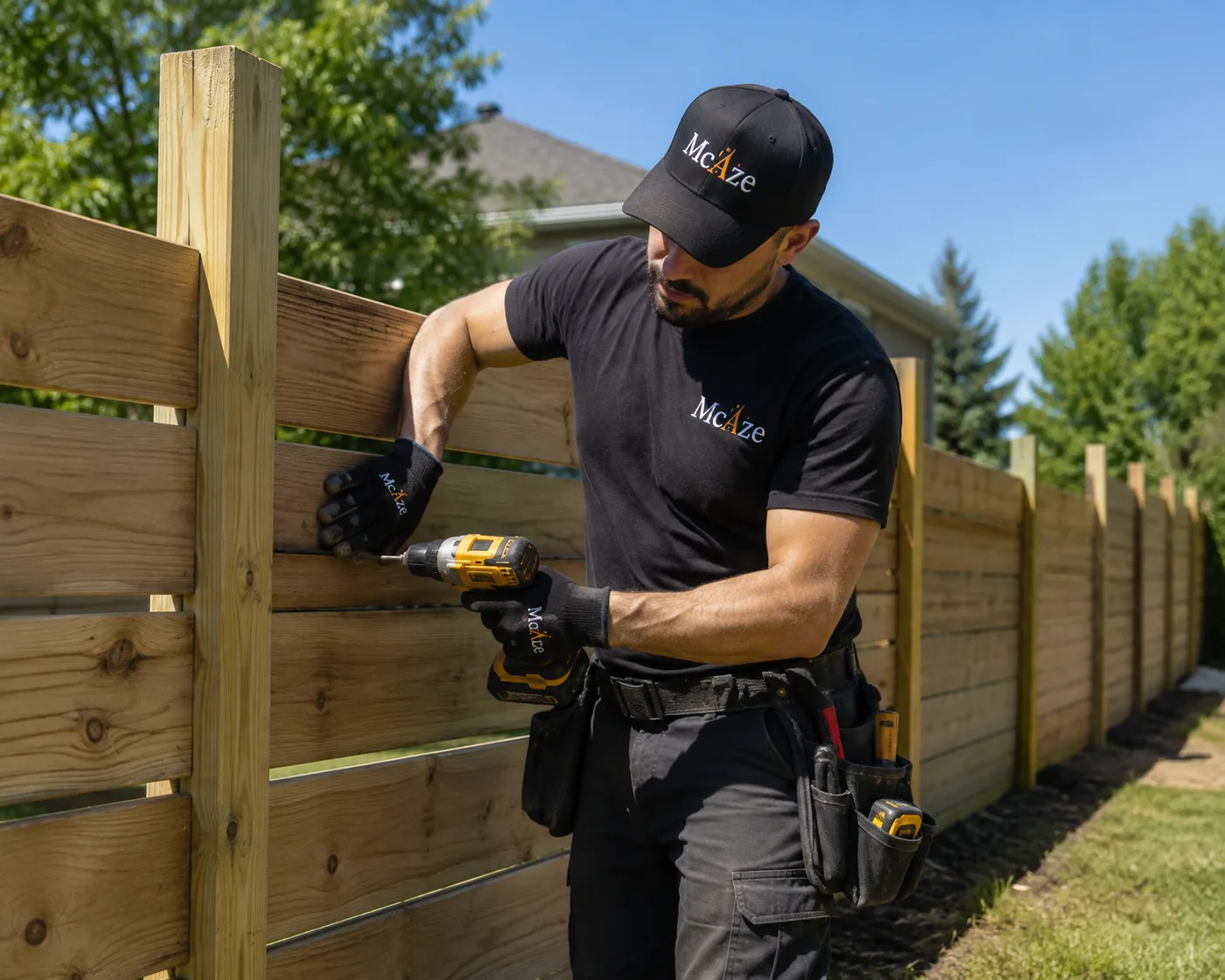
  • Total length, height and layout
  • Wood, chain-link, metal or approved composite system
  • Post size, spacing, excavation and concrete
  • Single, double and driveway gates
  • Existing-fence removal and disposal
  • Slope, roots, rock and restricted access
  • Decorative details and finishing
  • Property-line and bylaw coordination

Fence bylaws

How high can a residential fence be in Toronto?

Toronto fence height limits vary according to where the fence is located, the property type and whether it serves a pool or guard function. Front yards, areas beside streets and driveway sightlines can have different limits from an ordinary side or rear yard. Grade is also part of how height is measured.

The City's current Fence Bylaw page directs owners to the applicable height table and notes additional rules for materials, open-fence construction and pool enclosures. Owners seeking a fence that does not comply may need to request an exemption rather than build first and address enforcement later.

McAze confirms the intended location and height against the property-specific rules before finalizing the layout. A neighbour's existing fence or an older structure on the same lot is not reliable proof that a new fence will be compliant.

Review the City of Toronto Fence Bylaw guidance

Permits and approvals

Do you need a permit to build a fence in Toronto?

An ordinary residential boundary fence is generally governed by the Fence Bylaw rather than the same building-permit process used for a deck. However, a pool enclosure has a specific approval path, and fences that form guards, affect heritage attributes or are part of another permitted construction project can involve additional requirements.

Compliance is still mandatory when no standard building permit is required. Height, materials, visibility near driveways and location on the owner's property all matter. A proposed exception should be addressed before installation.

McAze reviews the project category and identifies likely municipal coordination. The City and any relevant property authority make the final determination for the specific fence and site.

Property boundaries

Do you need a survey before installing a fence?

A current legal survey is the best starting point when the boundary is uncertain. Existing fences, hedges, sheds and mowing lines can drift away from the actual property line over time. Installing from assumptions can place posts or concrete on neighbouring land and create a dispute after the work is complete.

The fence location should also account for maintenance access and any registered easements. A utility locate identifies underground infrastructure; it does not establish legal ownership boundaries. These are separate questions that require separate information.

McAze installs from a confirmed layout supplied or approved by the owner. Where survey evidence is missing or conflicting, the line should be resolved by the appropriate professional before excavation begins.

Neighbours

Should you talk to your neighbour before replacing a shared fence?

Yes. Early communication can clarify the proposed line, height, style, timing, access and treatment of the existing fence. It also helps identify plants, irrigation, pets and belongings that need protection. Agreement about cost should be documented between owners rather than assumed by the contractor.

A neighbour's contribution does not replace bylaw compliance or proof of the boundary. If the relationship is disputed, the contractor should not be placed in the role of deciding property rights. Work access from the neighbouring side also requires permission.

McAze asks the client to confirm ownership, approvals and agreed access before scheduling. A clear installation scope reduces last-minute design changes and conflict at the property line.

Utility safety

How are underground utilities checked before fence posts are dug?

Fence posts require excavation, so underground utility information must be obtained before digging. Public locate services identify covered infrastructure under their process, while private lines such as irrigation, landscape lighting, pool equipment or services beyond a meter may require separate locating.

Locate markings are used with the proposed post layout, but they do not guarantee that every private object or abandoned line is shown. Hand excavation or adjusted positions may be required near identified services. The design should never force a post through a known utility route.

McAze coordinates the installation schedule with valid locate information and asks owners to disclose private systems. Uncertainty is resolved before powered excavation proceeds in the affected area.

Post foundations

How deep should fence posts be in Toronto?

Post depth depends on fence height, post size, soil, exposure, grade and the selected system. A universal depth quoted without seeing the property is not a complete design. Posts must resist wind, gate loads and seasonal ground movement while avoiding buried services.

The hole, post and concrete relationship affects drainage and stability. Weak fill, roots, old footings and saturated soil may require a revised approach. Tall privacy fences and wide gates place greater forces on posts than open low systems.

McAze confirms post size, spacing and installation method as part of the scope. Existing posts are not automatically reused simply because they remain upright before new panels add load.

Material selection

Which fence material is best for a Toronto backyard?

There is no single best material. Pressure-treated wood is widely available and economical for privacy fencing, but it changes dimension and requires maintenance. Cedar offers a distinctive appearance and natural durability characteristics, while grade and exposure still matter. Chain-link provides an open, durable boundary at a different privacy level.

Metal and composite systems vary significantly in engineering, finish, post requirements, expansion and approved installation details. Decorative screens are not automatically structural fence panels. Product warranties depend on using compatible components and following the manufacturer's spacing and fastening requirements.

McAze compares privacy, budget, maintenance, wind exposure and surrounding architecture. The chosen system should suit the yard rather than being selected only from a small sample or social-media photograph.

Wood fencing

Is pressure-treated wood or cedar better for a fence?

Pressure-treated lumber and cedar can both be appropriate when properly selected and installed. Treated wood offers cost efficiency and resistance supported by its treatment, while drying movement, checking and colour change should be expected. Cedar is lighter and valued for appearance, but it is not immune to moisture, splitting or weathering.

Post material, board thickness, grade and fasteners influence performance as much as species. Mixing incompatible metals with treated wood can accelerate corrosion. Boards should be installed with the expected movement and desired privacy in mind.

McAze explains the visual and maintenance tradeoffs before ordering. A finish schedule is based on the actual product and moisture condition rather than applying coating immediately to every new board.

Horizontal fences

Are horizontal wood fences practical in Toronto?

Horizontal fences can create a clean contemporary appearance, but long boards make movement and post alignment more visible. They need appropriate spans, support and detailing so boards do not sag or twist. The back side should not become a climbable hazard where pool or other safety rules apply.

Slope transitions require a deliberate stepped or following-grade design. Tight spacing may increase wind load, while gaps change privacy. Decorative proportions should be resolved before construction rather than adjusted panel by panel.

McAze builds the post and rail system around the chosen orientation. A horizontal look is treated as an assembly with structural and maintenance consequences, not simply vertical boards turned sideways.

Gates

How do you prevent a fence gate from sagging?

Gate performance depends on rigid framing, diagonal support, suitable hinges, a strong latch post and accurate clearances. The post foundation must resist the repeated cantilevered load of opening and closing. A wide or heavy gate may need a different design from an ordinary person gate.

Wood movement, frost and uneven grade can change clearances. Double gates and vehicle openings need drop rods, stops and surfaces that support reliable use. Hardware should be exterior-rated and compatible with the fence material.

McAze plans gates around actual pathways, bins, lawn equipment and access needs. Posts and framing are installed for the gate at the beginning rather than cutting an opening into a standard panel later.

Driveway visibility

What fence rules apply near a driveway in Toronto?

Fences and vegetation near driveways can obstruct the view of pedestrians, cyclists and vehicles. Toronto's Fence Bylaw guidance states that fences within specified driveway areas must use open-fence construction for the required distance. The exact layout should be confirmed for the site.

A solid panel that is acceptable deeper in the yard may be inappropriate near the front lot line or driveway. Gates also need space to operate without blocking sidewalks or creating a dangerous blind movement.

McAze reviews driveway and street relationships before laying out privacy sections. Safety sightlines take priority over continuing one opaque style to the edge of the property.

Check Toronto's driveway visibility and fence rules

Pool safety

What are the rules for a pool fence in Toronto?

A pool enclosure is a safety system, not an ordinary privacy fence. Toronto requires a compliant enclosure around outdoor pools and a specific permit process. Gates, openings, climbability, surrounding objects and connections to buildings all affect compliance.

The City states that applicants need an approved Zoning Certificate and Pool Fence Enclosure Permit, with drawings showing the fence location, height and materials. A pool should not be filled before the required enclosure is installed and approved.

McAze works from the approved pool-enclosure documents. Decorative preferences cannot override gate, latch and opening requirements, and changes after approval should be confirmed before installation.

Review Toronto's Pool Fence Enclosure guide

Sloped properties

How is a fence installed on a sloped yard?

A fence can step between level panels or follow the grade, depending on style and material. The choice affects gaps below the fence, top-line appearance, panel fabrication and gate function. Strong changes in grade may require custom sections rather than forcing standard panels.

Height measurement under municipal rules considers grade, so adding soil or retaining features is not a simple way to change the permitted result. Drainage must continue across the yard, and fence work should not create a dam at the boundary.

McAze records key elevations and agrees on the top and bottom transitions before setting posts. The finished line should be intentional from both sides, with practical clearance for pets, maintenance and runoff.

Trees and landscaping

Can fence posts be installed near trees and roots?

Excavation near trees can damage important roots, while roots and trunks can also move or distort a fence over time. Protected trees and work within regulated areas may require additional review. Shifting a post slightly is preferable to cutting a major root without understanding the impact.

Hedges, vines and irrigation should be considered before removal and excavation. Plants growing through an old fence may need pruning by the owner or an appropriate professional. New panels need enough access for future maintenance.

McAze reviews visible landscape conflicts during layout and identifies areas requiring another specialist or revised span. Fence construction should organize the yard without sacrificing a valuable tree through avoidable digging.

Old fence removal

Is removal of the existing fence included?

Removal can be included when defined in the proposal. The work may involve panels, posts, concrete footings, gates, vines, nails and mixed materials. Old concrete can be larger than expected below grade, and access affects how debris is moved.

A shared fence should not be removed until ownership and neighbour coordination are clear. Salvage items and plants attached to the fence should be identified in advance. Property markers should not be disturbed casually during excavation.

McAze separates removal and disposal from new installation so the condition of the line can be reviewed before posts are reset. Hidden obstructions or boundary concerns are documented rather than covered by the new fence.

Repair or replacement

Should a leaning fence be repaired or replaced?

A localized repair may be reasonable when a limited number of posts or panels have failed and the remaining system is sound. Leaning across a long run, widespread rot, weak gates or undersized posts can make repeated repairs less predictable than replacement.

The cause matters. Frost movement, poor drainage, shallow posts, wind, roots and heavy vines may continue affecting a new panel installed on the same foundation. Reusing posts should be based on condition and capacity, not merely convenience.

McAze identifies what can reasonably remain and explains repair limitations. The homeowner can then compare a focused correction with a complete system that resets alignment and materials.

Privacy

How can a fence improve privacy without making the yard feel closed in?

Privacy depends on viewing angles, nearby windows, decks and grade—not only maximum fence height. Strategic solid sections, open tops, planting and screen placement can address sightlines while preserving light and airflow. A taller fence is not always permitted or more comfortable.

Wind exposure increases with solid area. Long opaque runs need suitable posts and spacing, and corner conditions can concentrate forces. The finished side and appearance from neighbouring properties should be considered as part of a balanced design.

McAze reviews where privacy is actually needed and coordinates the fence with decks and landscaping. This avoids paying for a visually heavy enclosure where a focused solution would work better.

Maintenance

How should a new wood fence be maintained?

Wood should be inspected for movement, loose fasteners, soil contact, trapped vegetation and drainage problems. Cleaning and finish timing depend on the lumber, exposure, moisture and coating manufacturer. New treated wood may need time to reach a suitable condition before finishing.

A coating cannot correct decay or unstable posts. Gates should be adjusted before sagging damages latches and frames. Soil, mulch and snow should not remain piled against boards and rails where they hold moisture.

McAze provides product-specific guidance where available. Keeping the finish name and colour helps future maintenance remain compatible and consistent.

Project timeline

How long does fence installation take?

Duration depends on fence length, removal, excavation, soil, access, gates, material and weather. A short open run can progress quickly, while roots, old concrete, rock, custom gates and narrow side yards add time. Concrete and finishes may need curing or drying before full use.

The complete timeline includes layout confirmation, neighbour communication, utility locates, material ordering, removal, post work, framing or panels, gates and cleanup. Pool fences and exceptions require approvals before work.

McAze confirms a practical sequence after the line and system are known. Owners are told when gates can be used and when any finish or concrete has reached the required stage.

Contractor selection

How do you choose a fence contractor in Toronto?

A professional proposal should identify length, height, style, materials, post size and spacing, concrete, rails, boards or panels, gates, hardware, removal, disposal, finishing and exclusions. It should also state who confirms the property line and coordinates utility locates.

Ask how grade changes, driveway visibility, pool rules and hidden footings will be handled. A contractor should not promise an exception to municipal rules or decide a neighbour dispute. Product systems should follow their approved installation requirements.

McAze connects fence construction to site conditions and future use. A straight, stable line with reliable gates and maintainable details is more important than installing the greatest number of panels in one day.

  • Is the property line confirmed?
  • Are height and visibility rules reviewed?
  • Who coordinates utility locates?
  • Are posts, concrete and spacing specified?
  • Are gates and hardware fully described?
  • Is old-fence removal and disposal included?
  • How are slope, roots and hidden concrete handled?

McAze workflow

How does the McAze fence installation process work?

The process begins with the purpose, proposed line, height, style, gates, property documents and access. McAze reviews municipal considerations, utilities, grade, existing fence, trees and related deck or landscape work. The confirmed system supports a written proposal.

Before excavation, the owner confirms boundaries and neighbour access, required approvals are obtained and locate information is valid. Removal proceeds as scoped, post positions are set, foundations are installed and the fence and gates are assembled with exterior-rated components.

Alignment, gate operation, clearances and cleanup are reviewed at handover. Care information and any open site-restoration items are documented so the fence begins service in a controlled condition.

  • Consultation and line review
  • Bylaw, survey and locate coordination
  • Written scope and material confirmation
  • Removal and site preparation
  • Post foundation installation
  • Panels, boards, gates and details
  • Cleanup, walkthrough and care guidance

Service area

Where does McAze install fences?

McAze provides fence installation and replacement in Toronto and GTA communities including Vaughan, Markham, Richmond Hill, North York and Mississauga, subject to scope and availability.

Municipal rules vary outside Toronto, so height, pool enclosure and approval requirements are checked for the actual property. Lot access, grading and neighbourhood form also change the installation plan.

To request an estimate, share the address, approximate length and height, survey if available, photographs, preferred material, gate needs and condition of the existing fence. McAze can then identify the next practical steps.

Frequently Asked Questions

What else do homeowners ask about fence installation?

Does McAze provide written fence estimates?+

Yes. The estimate defines length, height, materials, posts, concrete, gates, removal, disposal, finishing and exclusions.

Does a Toronto fence need a permit?+

Ordinary fences are governed by the Fence Bylaw, while pool enclosures require a specific zoning and permit process. Property-specific requirements are confirmed before work.

Who confirms the property line?+

The property owner is responsible for confirming the legal line, normally using a current survey or appropriate professional advice where the boundary is uncertain.

Can McAze remove the old fence?+

Yes, when included in the scope and after ownership, neighbour coordination, salvage items and access are confirmed.

Can gates be included?+

Yes. Person gates, selected double gates and suitable exterior hardware can be planned with properly supported posts and clearances.

Where does McAze install fences?+

McAze serves Toronto and GTA communities including Vaughan, Markham, Richmond Hill, North York and Mississauga, subject to scope and availability.

Are you planning a new fence in Toronto or the GTA?

Send McAze the property location, approximate length, desired height, photographs and a survey if available. We will review the line, access, bylaw considerations and material options before preparing a written estimate.

Get Free Estimate