McAze logo

Roofing Services in Toronto & the GTA

Roofing Services

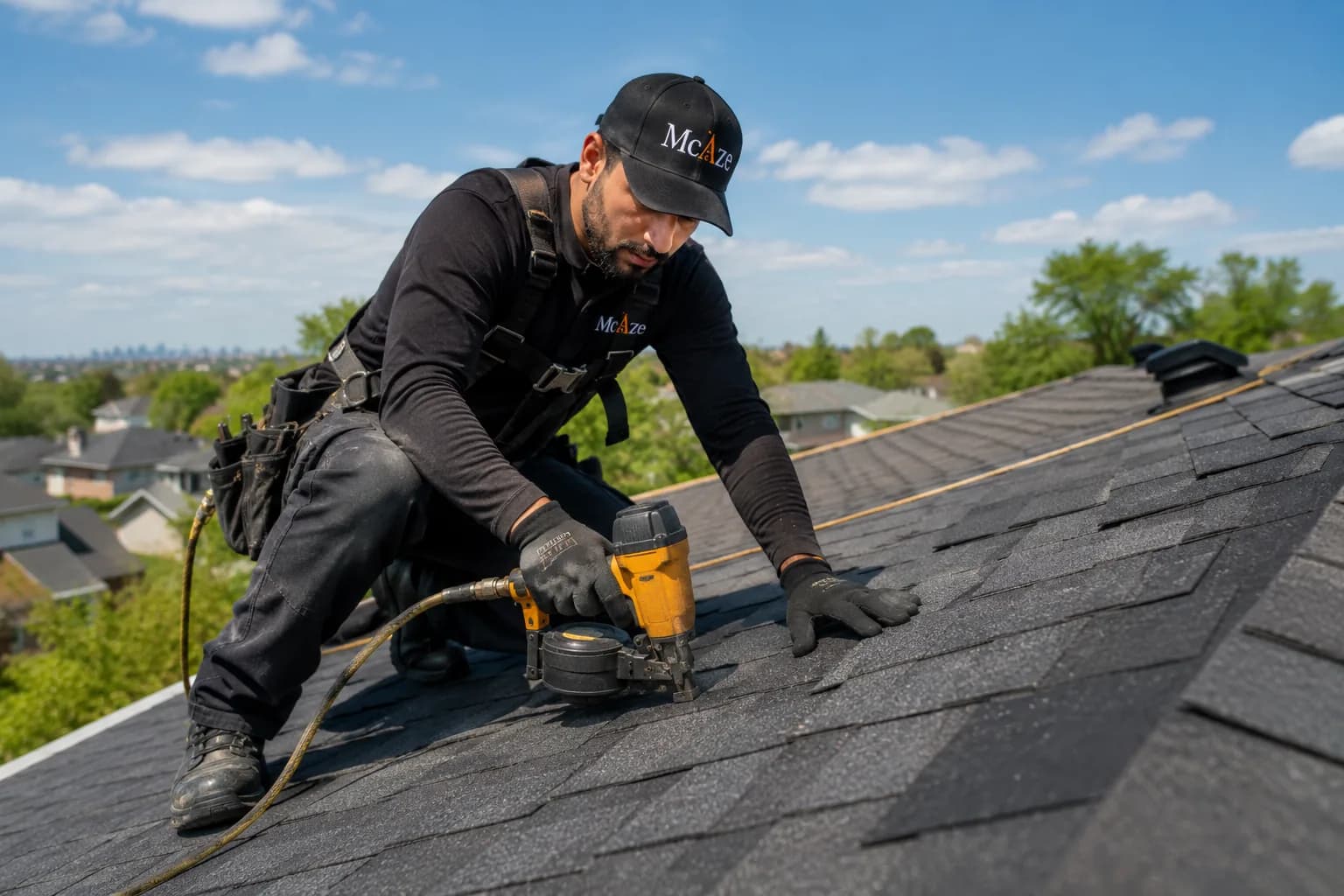
McAze plans suitable roof repairs and replacement scopes around the complete water-shedding system—from decking and underlayment to flashing, ventilation, shingles and cleanup.

Roofing Services — McAze renovation and construction

Planning Guide

What should homeowners check before repairing or replacing a roof?

A roof is a connected weather-management system. Shingles are the visible surface, but performance also depends on the deck, underlayment, eaves protection, valleys, flashings, vents, penetrations, gutters and attic conditions. Replacing only the most obvious damaged material can leave the actual leak path unchanged.

McAze provides suitable residential roofing repairs and replacement coordination across Toronto and the Greater Toronto Area. Scope is based on safe access, visible conditions, roof geometry and the work that can be confirmed before removal. Structural, hazardous-material, specialty membrane and regulated work requires the appropriate qualified provider when applicable.

The questions below address common roofing searches about cost, repair versus replacement, shingle life, leaks, ice dams, ventilation, decking, flashing, permits, warranties, insurance, storm damage, winter work and choosing a roofing contractor.

Budget planning

How much does roof replacement cost in Toronto?

Roofing cost depends on measured roof area rather than interior floor area, plus pitch, height, layers, valleys, dormers, chimneys, skylights, access and disposal. Product system, underlayment, flashing and ventilation choices also affect the total.

Decking repairs cannot always be quantified until shingles are removed. A responsible proposal states the included sheathing allowance or unit price instead of assuming every concealed surface is sound.

McAze prepares a written scope that separates known work from potential deck or structural correction. Homeowners should compare system components and exclusions, not only the final number.

  • Roof size, slope and number of storeys
  • Removal of existing roofing layers
  • Deck repairs and edge condition
  • Underlayment, eaves and valley protection
  • Shingles, flashing, vents and accessories
  • Access, protection, disposal and cleanup

Roof condition

Should you repair a roof or replace it?

A localized repair may be appropriate when damage is limited, surrounding material is serviceable and the leak source can be identified. Broad curling, granule loss, repeated leaks, brittle shingles, widespread flashing problems or a failing deck can make replacement more practical.

Age alone does not answer the question. Installation quality, ventilation, sun exposure, storms and roof geometry affect condition. Matching older shingles may also be difficult even when a small repair is technically possible.

McAze documents visible evidence and explains the limits of a repair. The goal is not to describe a patch as a new-roof solution when the surrounding system is near the end of service life.

Service life

How long do asphalt shingles last in Ontario?

Service life varies by product, installation, slope, orientation, ventilation, attic moisture, maintenance and weather exposure. A manufacturer's product designation or warranty period is not a promise that every roof will remain problem-free for that many years.

Dark, poorly ventilated roof surfaces can run hot, while wind, freeze-thaw cycles, ice and debris stress edges and flashings. Low slopes require products and underlayment approved for that application.

McAze evaluates condition and system compatibility rather than relying on age alone. Product instructions and warranty terms are reviewed for the selected roof assembly.

Leak diagnosis

Why is the roof leaking if the shingles look fine?

Water can enter at step flashing, wall intersections, valleys, vents, plumbing stacks, skylights, chimneys, exposed fasteners or damaged underlayment. It can travel along decking or framing before appearing on an interior ceiling.

Condensation can also resemble a roof leak. Warm humid air entering a cold attic may wet sheathing or insulation even when rain is not entering through shingles.

McAze reviews exterior and accessible interior clues where safe. Difficult or intermittent leaks may require staged testing or specialist assessment, and no contractor should promise a source without evidence.

Emergency response

What should you do when a roof starts leaking?

Protect people first and avoid entering an attic with unsafe electrical, structural or wet conditions. Move belongings, contain water where safe and photograph damage. Do not climb onto a wet, icy or storm-exposed roof.

Temporary exterior measures should be installed only by workers equipped for the conditions. Interior staining may continue after the opening is covered because wet materials still hold water.

McAze can assess suitable repair scopes when conditions allow safe access. Emergency stabilization and permanent reconstruction are documented separately so temporary work is not mistaken for a finished repair.

Ice and winter

What causes ice dams on Toronto roofs?

Ice dams form when heat escaping into the attic melts snow higher on the roof and the water refreezes near colder eaves. Blocked drainage can force water beneath roofing layers. Insulation gaps, air leakage and weak ventilation can contribute.

Removing visible ice does not correct the underlying heat and moisture path. Aggressive chopping or salt can damage shingles, eaves and metal. Heavy snow and ice also create fall and falling-object hazards.

McAze reviews roofing details alongside accessible attic clues. Lasting improvement may require air sealing, insulation or ventilation work outside a basic shingle scope.

Attic ventilation

Does a new roof need more ventilation?

Ventilation must suit the attic configuration and work with air sealing and insulation. Adding random roof vents without adequate intake or without understanding connected attic spaces may not improve airflow.

Bathroom and kitchen exhaust should not discharge into an attic. Blocked soffits, discontinuous insulation and unsealed ceiling openings can contribute to moisture and heat problems.

McAze reviews existing vents and roof geometry during planning. Changes follow applicable design and product requirements rather than a fixed vents-per-roof rule.

Roof deck

When does roof sheathing need replacement?

Sheathing may need repair when it is rotten, delaminated, structurally damaged, excessively uneven or unable to hold fasteners. Staining alone does not always prove loss of strength, but soft or deteriorated areas should not be covered.

The full condition often becomes visible only after tear-off. Previous leaks, unsupported joints or multiple patch materials can require more work than an exterior inspection reveals.

McAze photographs concealed findings and applies the agreed repair method or unit pricing. Structural framing damage is escalated for appropriate design rather than treated as ordinary plywood replacement.

Waterproofing layers

What underlayment and ice protection should a roof have?

Underlayment provides secondary protection beneath shingles, while self-adhered membrane is commonly used at vulnerable eaves, valleys and penetrations according to design, code and manufacturer requirements. These layers do not replace correct flashing.

Low slopes, complex valleys and heated roof edges require careful system selection. Mixing incompatible materials or ignoring substrate preparation can undermine adhesion and warranty coverage.

McAze identifies the proposed layers and locations in the scope. Installation follows the selected system's instructions and applicable requirements.

Flashing

Should roof flashing be replaced with the shingles?

Flashings at walls, chimneys, valleys and penetrations are critical leak-control components. Some existing metal may be reusable when sound and compatible, while corroded, damaged, poorly integrated or concealed flashing should be replaced.

Smearing exposed sealant over an incorrect flashing detail is not equivalent to rebuilding the water path. Sealants age and should support an appropriate assembly rather than serve as the only defence.

McAze defines visible flashing work and notes areas that require opening to confirm. Siding, masonry, skylights or chimneys may need related specialist repair.

Material selection

What type of roofing is best for a Toronto home?

Architectural asphalt shingles are common for sloped homes because they balance cost, appearance and serviceability. Metal and specialty systems can offer different durability and detailing but require compatible structure, slope, fastening and skilled installation.

Flat and low-slope roofs use membrane systems rather than ordinary shingles. The best choice depends on geometry, drainage, existing assembly, appearance, budget and how future penetrations will be managed.

McAze recommends only systems appropriate to the confirmed roof. Colour and profile are selected after technical compatibility, not before it.

Permits

Do you need a building permit to replace a roof in Toronto?

Toronto lists replacement of existing roofing material as not requiring a building permit when no structural work is involved. Structural alterations, a changed roof form, certain skylight work, rooftop systems or other material alterations can require permits.

The owner remains responsible for compliance, and a roofing project should not use the no-permit rule to conceal framing changes. Heritage or other property-specific approvals may also apply.

McAze distinguishes surface replacement from structural or regulated work before construction. Questions are confirmed with Toronto Building or the appropriate authority for the actual property.

Check Toronto's building permit guidance

Storm damage

How should storm-damaged roofing be documented for insurance?

Photograph conditions from safe locations, record the event date and protect the interior from further damage where practical. Contact the insurer promptly and follow its instructions before disposing of damaged materials or authorizing permanent work.

An insurance policy determines coverage, deductible and required process. A contractor can document observed construction damage but should not promise claim approval or interpret coverage as the insurer.

McAze separates emergency measures, inspection findings and proposed repairs. The owner remains responsible for insurer communication and authorization.

Winter roofing

Can a roof be replaced during winter?

Some roofing work can proceed in cold weather, but product temperature limits, sealing behaviour, snow, ice, daylight and worker safety affect the decision. Wet or frozen decking should not be covered simply to maintain a date.

Emergency repairs may be necessary in winter, while planned replacement may be better scheduled for stable conditions. Materials may require special storage or hand-sealing according to manufacturer instructions.

McAze schedules around safe access and suitable installation conditions. Weather delay is treated as roof protection, not poor project management.

Property protection

How are gutters, siding and landscaping protected during roofing?

Tear-off produces sharp debris and nails. Driveways, entrances, windows, siding, air-conditioning equipment, decks and planting need a planned protection and cleanup route. Bins and deliveries must suit the property and public access.

Gutters can be damaged by ladders or falling material if access is improvised. Magnetic sweeping helps collect ferrous nails but does not replace careful tarping, controlled removal and visual cleanup.

McAze defines staging, daily cleanup and final inspection. Owners are told when vehicles and fragile items must be moved before work begins.

Warranty

What does a roofing warranty actually cover?

Material and workmanship warranties are different. Manufacturer coverage depends on the product, installation, ventilation, registration and exclusions, while contractor coverage applies to the stated installation work and period.

A long headline term may include prorating or limited remedies. Damage from structure, condensation, other trades, extreme events or unapproved alterations may be excluded.

Ontario advises homeowners to ask who backs each warranty and whether special installer qualifications are required. McAze provides the applicable documents and does not merge separate warranties into one unsupported promise.

Read Ontario's guidance for hiring a roofer

Contractor selection

How do you choose a roofing contractor in Ontario?

Compare written estimates, references, insurance, safety practices, material systems, cleanup and warranties. Ontario recommends obtaining multiple quotes and asking for current, recent and past references.

The contract should identify materials, labour, schedule, total cost, deposit, delays, property protection, cleanup, damage responsibility and warranties. Avoid pressure to approve a roof from an undocumented door-to-door inspection.

Roof workers face serious fall hazards. Ontario guidance says workers who may use fall protection must have appropriate working-at-heights training and equipment. McAze plans suitable work around documented scope and safe access.

  • Is the roof system fully described?
  • Are deck repairs and exclusions priced clearly?
  • Are insurance and safety practices documented?
  • How are flashing and ventilation handled?
  • Who protects and cleans the property?
  • Who backs each warranty?
Review Ontario roofing consumer and safety advice

McAze workflow

How does the McAze roofing process work?

The process begins with the roof history, visible symptoms, geometry, access and accessible attic or interior evidence. McAze defines whether the next step is a focused repair review, a replacement proposal or specialist assessment.

The written scope identifies removal, protection, materials, flashing, ventilation, disposal, known repairs and concealed-condition pricing. Work is scheduled for safe and suitable weather, with vulnerable areas kept protected during installation.

The project concludes with cleanup, a visual review and applicable product and workmanship information. Photos document important concealed findings and completed details where practical.

  • Roof and leak-history review
  • Written repair or replacement scope
  • Material and accessory confirmation
  • Property protection and tear-off
  • Deck review and approved correction
  • Roof-system installation and cleanup
  • Walkthrough and warranty handover

Service area

Where does McAze provide roofing services?

McAze provides suitable residential roofing scopes in Toronto and GTA communities including Vaughan, Markham, Richmond Hill, North York and Mississauga, subject to roof type, scope and availability.

Steep, high, complex, flat, commercial or hazardous roofs may require specialist equipment or a dedicated roofing provider. Suitability is determined before a proposal is offered.

To request an assessment, share the address, roof age if known, photographs from safe locations, leak history, previous repairs and any insurer or permit information.

Frequently Asked Questions

What else do homeowners ask about roofing?

Does McAze provide written roofing estimates?+

Yes. The proposal defines removal, materials, underlayment, flashing, ventilation, disposal, known repairs, concealed-condition pricing and exclusions.

Can McAze repair a roof leak?+

Suitable localized leaks can be assessed and repaired when the source, surrounding roof condition and safe access support a durable scope.

Does shingle replacement require a Toronto permit?+

Replacing existing roofing material generally does not require a permit when no structural work is involved. Structural or other regulated alterations require confirmation.

Will damaged roof decking be replaced?+

Damaged sheathing can be replaced within the agreed method or unit pricing after tear-off exposes its actual condition. Structural framing issues require separate review.

Can roofing be completed in winter?+

Some work can proceed when access, weather and manufacturer temperature requirements allow. Wet, icy or unsafe conditions can require delay or temporary protection.

Where does McAze provide roofing services?+

McAze serves suitable residential roofing scopes in Toronto and GTA communities including Vaughan, Markham, Richmond Hill, North York and Mississauga.

Do you need a roof assessment in Toronto or the GTA?

Send McAze your address, safe photographs, roof age and leak or storm history. We will review whether the appropriate next step is a repair assessment, replacement scope or specialist referral.

Get Free Estimate