McAze logo

Drywall Installation & Repair in Toronto and the GTA

Drywall Installation & Repair

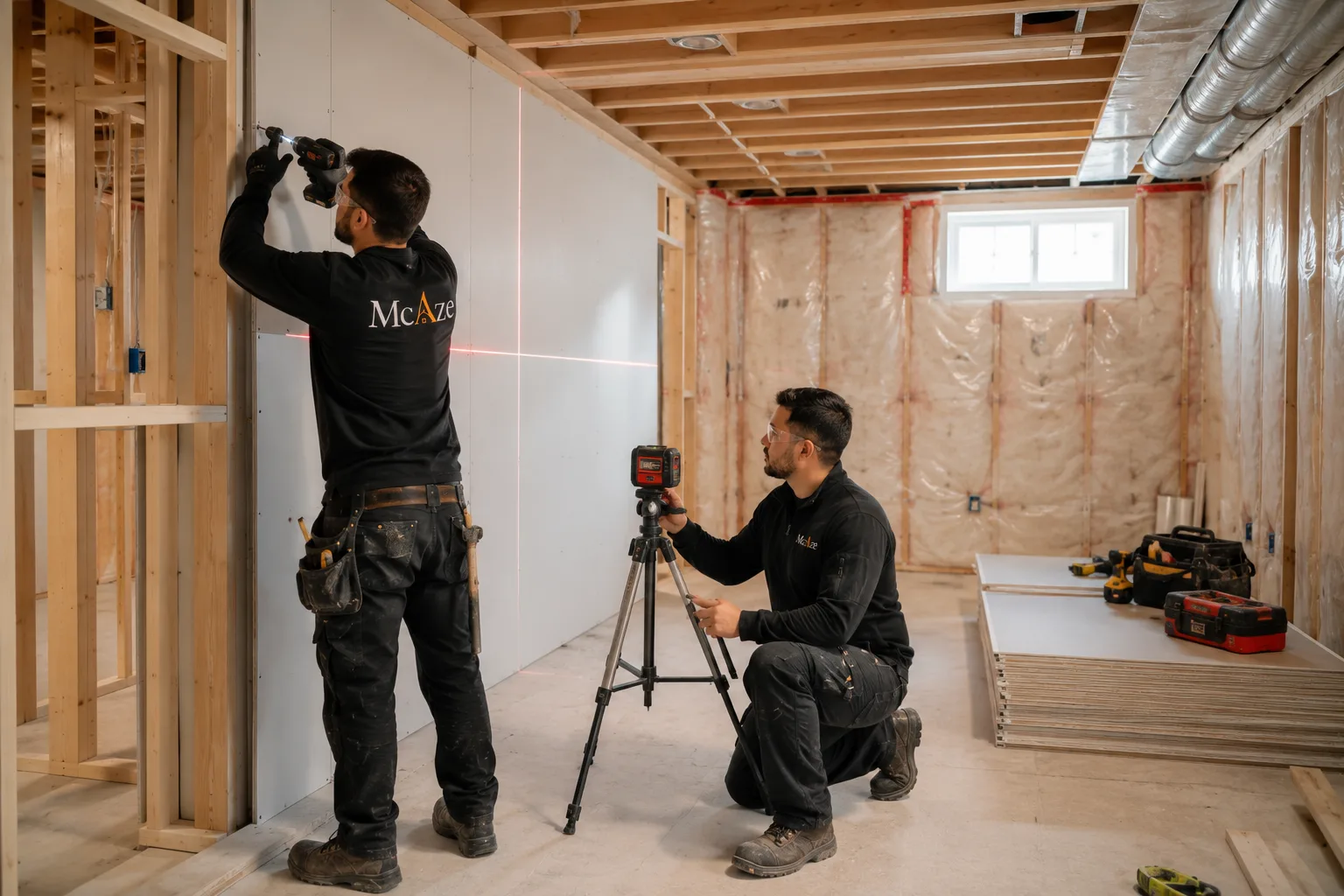
McAze installs, finishes and repairs drywall for homes, condos, basements and commercial renovations, with careful protection, practical dust control and surfaces prepared for a consistent paint finish.

Drywall Installation & Repair — McAze renovation and construction

Planning Guide

What should you know before hiring a drywall contractor?

Drywall looks simple after it is painted, but the completed surface records almost every decision made underneath it. Framing alignment, board selection, fastening, joint layout, corner treatment, compound build-up, drying time, sanding and lighting all affect whether walls and ceilings appear flat and consistent. A successful repair must also address the reason for the damage instead of covering a symptom.

McAze provides drywall installation and repair across Toronto and the Greater Toronto Area as a focused service or part of a larger renovation. Typical work includes new partitions, basement boards, ceiling repairs, patches after plumbing or electrical access, damaged-corner repairs, joint finishing, skim coating and preparation for painting. The scope is matched to the property, substrate, room use and final finish expected.

The guide below answers questions Toronto homeowners commonly ask before requesting an estimate. It explains how pricing is formed, when replacement is better than patching, how water and mould concerns should be handled, what finish levels mean and when permits or specialized assessment may be required.

Budget planning

How much does drywall installation or repair cost in Toronto?

Drywall cost depends on more than the visible square footage. A complete estimate may include site protection, board delivery, framing corrections, insulation coordination, board type and thickness, access equipment, fastening, corner bead, tape, several compound applications, drying visits, sanding, dust control, primer readiness, cleanup and disposal. A single ceiling patch can require more setup per square foot than boarding an open unfinished room.

Height, curves, bulkheads, stairwells, occupied rooms and restricted condominium access increase labour. Repairs also carry uncertainty because the opening may reveal wet insulation, unsupported edges, damaged framing or previous layers that cannot accept a durable patch. Texture matching and surfaces exposed to strong side lighting need additional care.

McAze prices drywall after reviewing dimensions, access, existing conditions and the finish expected. Homeowners should compare complete written scopes rather than a board-only or per-square-foot figure. Clarify whether framing corrections, disposal, primer, painting and hidden-condition work are included or separately authorized.

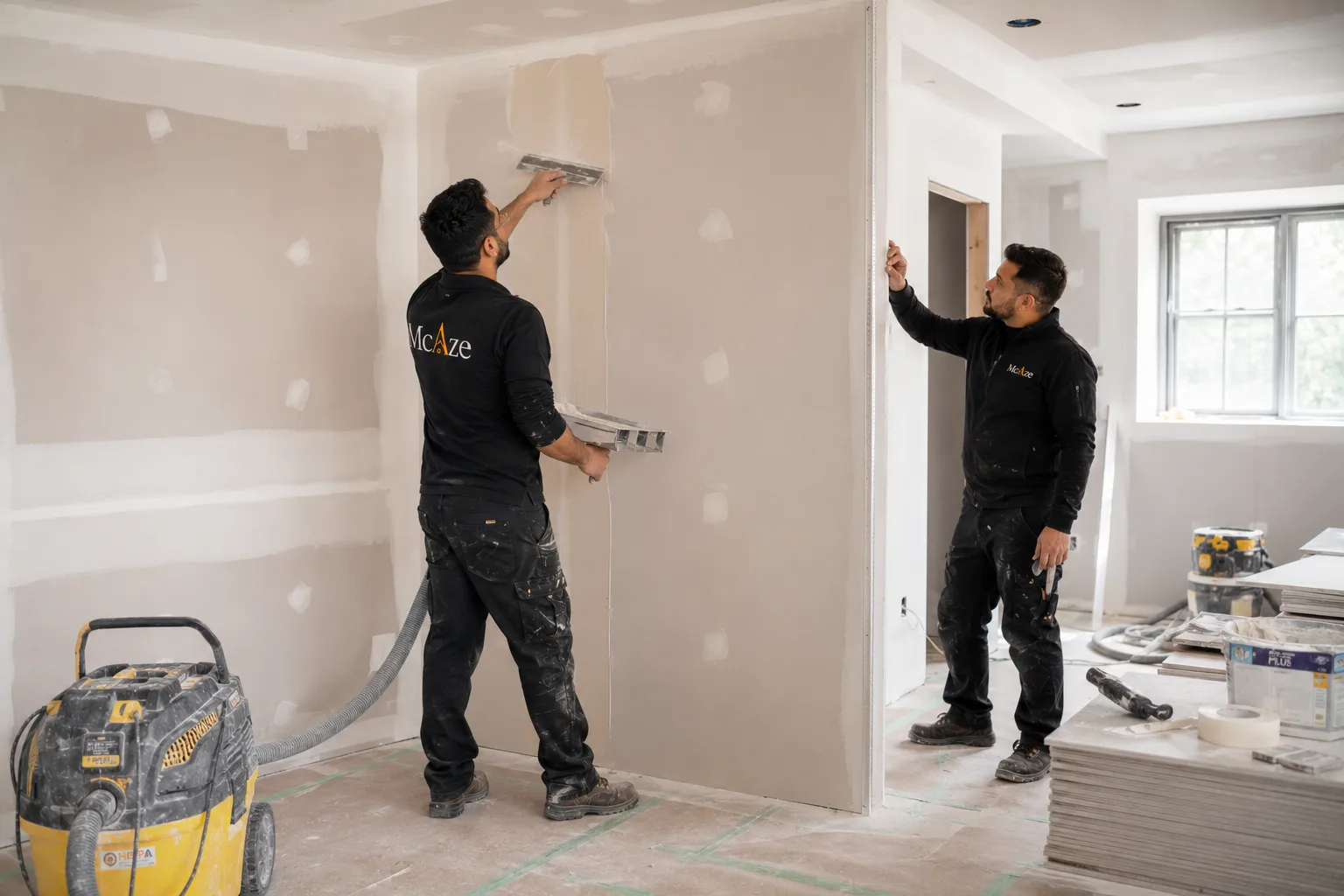
  • New installation, localized repair or full replacement
  • Wall and ceiling area, height and access
  • Board type, thickness and fire or moisture requirements
  • Framing condition and insulation coordination
  • Finish level, texture and lighting conditions
  • Protection, dust control and occupied-home logistics
  • Primer, painting, trim and final cleanup

Repair decisions

Should damaged drywall be patched or replaced?

Small holes, stable cracks and limited impact damage can often be repaired when the surrounding board is dry, sound and securely supported. The repair must extend to stable material, receive backing where necessary and be finished over a wide enough area that the transition does not remain visible after painting.

Replacement is usually more appropriate when the board is soft, sagging, delaminated, repeatedly wet, extensively cracked or contaminated. Large areas with many unsuccessful patches may also be faster and more consistent to replace. Damage at fire separations, shower assemblies or exterior-wall insulation requires the whole assembly to be considered, not only the face paper.

McAze inspects the cause and boundary before selecting the method. A repair should restore a stable surface without hiding leakage, movement or unsafe material. Where the condition cannot be confirmed visually, the scope may include controlled opening and a decision after concealed areas are reviewed.

Water damage

Can water-damaged drywall be repaired?

Water-damaged drywall should not be closed or painted until the source has been identified, corrected and the assembly is dry. Plumbing leaks, roof or window entry, condensation and foundation moisture can continue behind an apparently successful patch. Staining alone does not show how far water travelled through insulation, framing or adjacent board.

Brief contact does not automatically mean every board must be removed, but softened gypsum, swollen edges, sagging ceilings, separated paper and persistent odour indicate loss of integrity. Wet insulation and concealed cavities may need access for drying and assessment. Electrical components affected by water require the appropriate trade.

Health Canada advises checking for mould wherever dampness or known water damage exists and correcting the underlying moisture problem. McAze defines ordinary drywall restoration separately from specialized remediation so homeowners understand what can proceed safely and what requires further assessment.

Read Health Canada's guide to moisture and mould indoors

Mould concerns

What happens if mould is found behind drywall?

Work should pause in the affected area while the moisture source and extent are evaluated. Painting, spraying or closing the wall does not remove a concealed moisture problem. Porous materials can hold contamination beyond what is visible, and demolition without an appropriate containment plan can distribute dust through the property.

The response depends on the size, cause, occupants and materials involved. Limited conditions may be addressed under appropriate guidance after the source is fixed, while extensive, recurring or uncertain contamination may require a qualified remediation professional. Anyone with health concerns should obtain appropriate advice before cleanup begins.

McAze does not represent an unexplained mould condition as an ordinary patch. Once the area has been properly assessed, remediated where required and released for reconstruction, new insulation, vapour-control components and drywall can be coordinated without recreating the original moisture trap.

Review Health Canada's mould guidance

Cracks and movement

Why do drywall cracks and nail pops keep coming back?

Recurring defects usually indicate movement or an incomplete previous repair. Seasonal framing movement, truss uplift, settlement, loose board edges, insufficient fastening, joints placed at stressed openings and incompatible old patches can all create a visible line. Simply filling the surface may leave the original movement unchanged.

A stable repair may require opening the crack, checking support, adding appropriate fastening or backing, replacing failed tape and spreading compound beyond the defect. Cracks that are wide, diagonal, rapidly changing or accompanied by sticking doors and other movement should be evaluated before cosmetic work proceeds.

McAze distinguishes a finish defect from a possible building-movement concern. The estimate explains the repair method and any limitation on guaranteeing a crack whose underlying cause falls outside the drywall scope.

Holes and access cuts

Can drywall holes from plumbing or electrical work be made invisible?

Many access openings can be blended successfully when the edges are cut back to sound material and supported properly. The patch must sit flush with the existing face, and tape and compound need enough width to reduce a visible hump. Nearby texture, paint sheen and side lighting determine how much finishing area is required.

Before closing, the responsible trade must confirm that the repair, connection or inspection behind the wall is complete. Access panels may be more appropriate where valves, cleanouts or equipment require future service. Closing a required access point creates unnecessary damage later.

McAze coordinates patching with plumbing, electrical, HVAC and painting work. Where practical, multiple openings are grouped into one visit, while drying time between compound applications is respected rather than hidden by a rushed schedule.

Ceiling repairs

How are ceiling cracks, holes and sagging drywall repaired?

Ceiling work is more sensitive to gravity and lighting than an ordinary wall patch. The source of sagging or staining must be understood first. Loose boards may need refastening where framing is sound; damaged areas may require removal to suitable supports. A broad finish is often necessary because daylight and ceiling fixtures reveal narrow ridges.

Texture matching can be approximate rather than invisible, especially with older sprayed, stippled or hand-applied patterns. In some rooms, removing or skim coating the wider texture creates a more predictable result than reproducing one small area. Existing textured coatings should not be disturbed until potentially hazardous materials have been considered.

McAze reviews ceiling height, furniture, floor protection, fixture locations and access before work begins. The written scope identifies whether the goal is a local repair, texture blend, larger skim coat or full ceiling replacement and whether painting is included.

Smooth surfaces

What is skim coating and when is it needed?

Skim coating applies a thin, continuous layer of finishing compound to improve an uneven surface. It can help after wallpaper removal, extensive patching, texture changes or repeated poor repairs. It does not correct active movement, wet material or severely unstable layers; those conditions must be resolved first.

The amount of preparation depends on adhesion and surface condition. Loose paint, paper damage, contamination and high ridges may need separate treatment before the skim coat. Several applications and careful sanding can be required, followed by a suitable primer to equalize porosity before paint.

McAze uses skim coating where it provides a more consistent result than a collection of isolated patches. Strong window light and low-sheen paint still reveal natural surface variation, so the expected finish and viewing conditions are discussed before the scope is confirmed.

Finish standards

What drywall finish level is appropriate before painting?

Drywall finish levels describe how completely joints, fasteners and surfaces are treated for the final decoration. Utility areas may not need the same finish as a living room, while smooth walls under critical lighting or glossy paint require more preparation. The label alone is not a promise that framing irregularities or every lighting condition will disappear.

A typical painted residential room requires fully treated joints and fasteners plus appropriate sanding and primer. A higher uniform finish may be considered for severe side lighting, large uninterrupted walls, dark colours or higher sheen. Texture and wallcovering systems have their own substrate requirements.

McAze defines the intended appearance in plain language and coordinates it with the painter. Samples or a site review under actual lighting can be more useful than assuming every room needs the most expensive finish.

Board selection

Which type of drywall should be used in bathrooms and basements?

Board selection depends on exposure and the complete wall assembly. Moisture-resistant gypsum board can suit selected damp locations, but it is not a waterproof shower membrane and should not be treated as one. Direct wet areas require an approved backer and waterproofing system compatible with the tile or finish.

Basements need moisture-aware planning before boards are installed. Foundation leakage, condensation, insulation, air and vapour control, framing separation and floor conditions influence performance. A moisture-labelled panel cannot compensate for an active water problem or incorrectly designed exterior-wall assembly.

McAze coordinates board type with room use, applicable plans and manufacturer instructions. Standard, moisture-resistant, fire-rated, abuse-resistant and other products are selected for a reason rather than used interchangeably based on colour alone.

Fire safety

When is fire-rated drywall required?

Fire performance belongs to an entire tested or code-compliant assembly, not simply a sheet advertised as fire resistant. Board type and layers, framing, fastener spacing, joints, penetrations, insulation and continuity all affect the result. Garages, service rooms, exits, dwelling separations and multi-unit buildings may have specific requirements.

Cutting new openings or changing an assembly can affect required protection. Recessed devices, ducts, pipes and access panels must be coordinated rather than patched informally. Condominium and commercial properties may also have approved assemblies that cannot be substituted without review.

McAze follows the applicable drawings and confirmed requirements. Where the project changes a required separation or the existing assembly is uncertain, permit, designer or specialist guidance is established before boarding closes the area.

Sound control

Can drywall reduce noise between rooms or units?

Adding board can contribute to sound control, but performance depends on the whole wall or ceiling. Mass, separated framing, resilient channels, insulation, sealed edges, door construction, outlets, ducts and flanking paths all matter. One extra layer may help in some assemblies without solving sound that travels around it.

Noise type also changes the strategy. Voices and television differ from footsteps, plumbing vibration and mechanical equipment. In multi-unit buildings, work must preserve fire protection and comply with condominium rules; acoustic products should not be inserted in ways that compromise another required function.

McAze reviews the source, pathway and practical renovation limits before proposing a build-up. A defined assembly and realistic expectation are more useful than promising soundproofing from one product.

Old materials

Could old drywall compound or ceiling texture contain asbestos?

Some older buildings may contain asbestos in joint compound, plaster, textured coatings or other materials associated with walls and ceilings. Age and appearance cannot confirm content. Sanding, scraping, drilling or demolition can make an otherwise contained material airborne, so uncertainty must be resolved before disruptive work.

Existing reports should be shared with the contractor. Where suspect material may be disturbed, qualified sampling and laboratory analysis can inform the work plan. Positive results may require specialized procedures or abatement rather than ordinary drywall demolition and sanding.

McAze does not treat an unknown old texture or joint system as harmless by default. Testing and specialized work are separated from standard installation so safety decisions remain clear and documented.

Read Health Canada's guidance on asbestos in the home

Dust management

How is drywall dust controlled in an occupied home?

Drywall work produces dust during cutting, mixing and especially sanding. Effective control starts with isolating the work zone, protecting floors and fixed surfaces, managing air movement, using suitable extraction and selecting sanding methods appropriate to the repair. Dust control reduces migration; it does not make active construction dust-free.

Return-air paths, smoke alarms, pets, electronics, kitchens and adjacent bedrooms need advance planning. Tools and debris should move through a defined route, and the work area should receive regular cleanup rather than one final sweep. Occupants may need to avoid the zone during dusty stages.

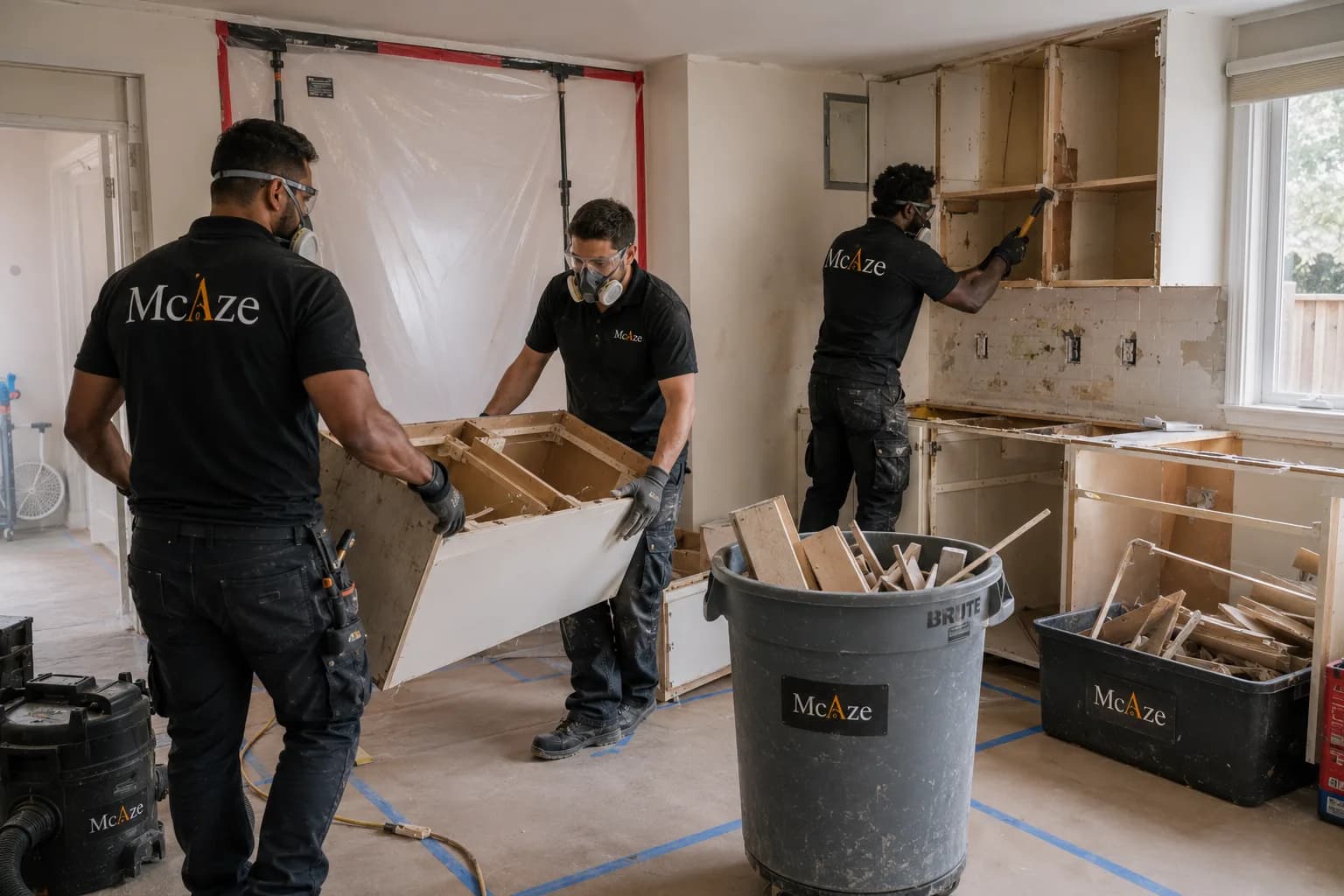
McAze sets protection and cleanup expectations in the scope. For larger projects, temporary barriers and negative-air equipment may be appropriate; for a small patch, focused local protection may be enough. The approach should match the scale and property.

Project timing

How long does drywall installation and finishing take?

Duration depends on board quantity, complexity, access, compound system, humidity, temperature and finish level. Boarding can move quickly in an open framed area, but finishing normally requires multiple applications with adequate drying between them. Repairs also need protection setup and return visits that are not visible in the patch size.

Mechanical, plumbing and electrical rough-ins and required inspections must be complete before walls are closed. Insulation and air or vapour-control work also need to be ready. After sanding, primer and painting add their own preparation and drying sequence.

McAze provides a practical schedule based on the actual assembly and season. Faster-setting compounds can help selected repairs, but they do not justify coating damp material or skipping the stages needed for a stable finish.

Renovation sequence

When should drywall happen during a renovation?

Drywall follows demolition, confirmed framing, rough mechanical work, plumbing and electrical work, necessary inspections, insulation and approved concealed details. Installing boards too early can hide incomplete work or force finished surfaces to be reopened. Cabinets, flooring and final trim generally rely on the walls being established first.

After boarding come joint treatment, drying, sanding, inspection under suitable light and primer. Finish painting can then be coordinated around flooring, cabinetry and trim according to the project. Final touchups occur after damage-prone work is complete.

McAze uses the drywall stage as a coordination point rather than an isolated trade. Dimensions, openings, backing and fixture locations are checked before closure so later installers receive predictable surfaces.

Permits and approvals

Do you need a permit for drywall work in Toronto?

A simple cosmetic patch or replacement of an equivalent interior finish may differ from creating rooms, moving partitions, altering structural elements or changing fire separations, exits, plumbing and mechanical systems. The permit question depends on the full alteration, not on the fact that drywall is one material in the scope.

Toronto provides a dedicated interior-alterations permit guide for residential work. Condominium owners must also obtain the corporation's current renovation requirements, even when a municipal permit is not required. Commercial and multi-unit work can involve additional drawings, approvals and life-safety coordination.

McAze identifies likely approval needs during scope planning, while the municipality, designer and property manager confirm requirements for the specific property. Required inspections are completed before concealed work is covered.

Review the City of Toronto Interior Alterations permit guide

Condominium work

Can drywall be installed or repaired in a Toronto condo?

Yes, subject to the building's rules and the nature of the work. Property management may require approval, contractor insurance, defined work hours, elevator bookings, corridor protection and information about noise, dust and debris. Walls can contain common services or form part of rated and acoustic assemblies that owners cannot alter casually.

New partitions, bulkheads, recessed features and ceiling work must be checked against sprinklers, detectors, fan-coil access and electrical systems. Material sizes and debris removal are planned around elevator and loading limitations.

McAze works from the approved scope and coordinates site protection with management requirements. Owners should request the renovation package before design decisions are finalized so the estimate reflects the actual building conditions.

Painting readiness

Is newly finished drywall ready to paint immediately?

The compound must be fully dry, sanded and cleaned before primer. New drywall and joint compound are porous and absorb paint differently, so an appropriate drywall primer helps create a more uniform base. Primer also makes remaining defects easier to see before finish coats.

Harsh side lighting, dark colours and higher sheen can reveal joints or sanding marks that looked acceptable under construction lighting. A quality-control review after primer allows targeted correction before the final colour multiplies the problem.

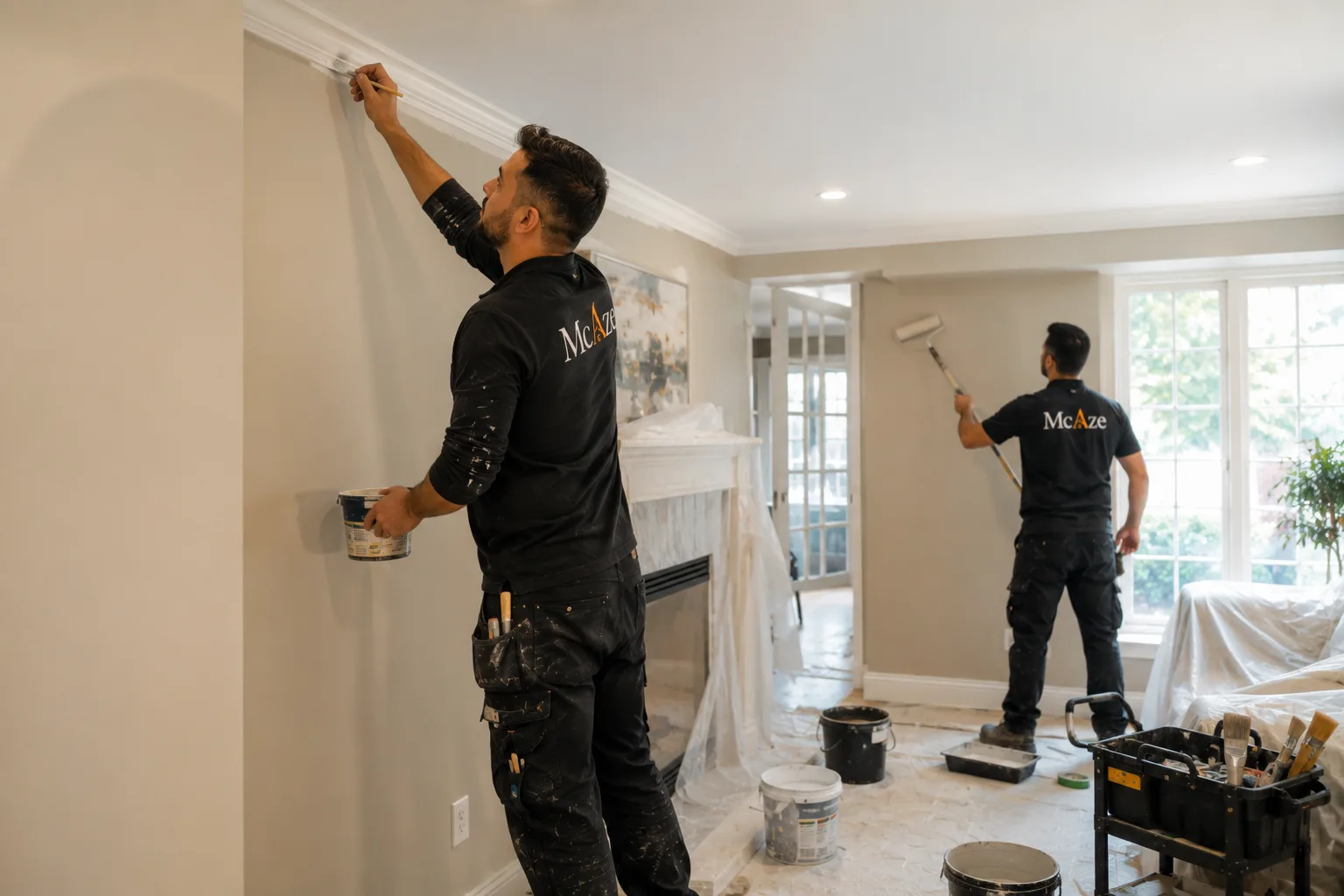
McAze coordinates drywall and painting so responsibility for final readiness is clear. The scope identifies whether the handoff is sanded, primed or fully painted and whether caulking, trim repairs and final touchups are included.

Contractor selection

How do you choose a drywall contractor in Toronto?

A professional proposal should describe the rooms, measured work, board type, finish expectation, repairs, protection, dust control, access, disposal, primer or paint and exclusions. Ask how framing irregularities, water damage, unknown textures and concealed conditions will be handled before extra work proceeds.

The contractor should understand sequencing and avoid covering work before required inspections. For rated, acoustic, wet-area or condominium assemblies, ask how the specified system will be followed. Photos and a low price cannot replace a scope that defines what the completed surface will be ready for.

McAze connects drywall to the wider renovation rather than treating it as a standalone cosmetic layer. Clear communication about cause, preparation and handoff helps prevent the same wall from being opened or repaired twice.

  • Is installation or repair scope measured and described?
  • Are board type and finish expectations identified?
  • Who handles protection, dust control and disposal?
  • Are primer and painting included or excluded?
  • How will water, mould or suspect materials be addressed?
  • Are permits, inspections and condo rules considered?
  • How are unforeseen framing or cavity conditions approved?

McAze workflow

How does McAze complete a drywall project?

The process starts with the reason for the work, room use, measurements, access and desired final finish. McAze reviews visible damage, moisture history, framing clues, adjoining finishes and related trades. The resulting proposal defines preparation, installation or repair, finishing, protection and handoff.

Before closure, concealed work and inspections are confirmed. Boards or patches are supported and fastened, joints and corners are treated through the necessary applications, and drying conditions are respected. Sanding and cleanup prepare the surface for review and primer.

The completed work is inspected under practical lighting, and any included primer, painting or trim work follows in sequence. Final cleanup and a walkthrough close the scope, with care or drying guidance explained to the homeowner.

  • Site review and cause assessment
  • Written scope and finish expectation
  • Protection and work-zone setup
  • Inspection and concealed-work confirmation
  • Boarding, repair, taping and finishing
  • Sanding, cleanup and primer-readiness review
  • Painting coordination and final walkthrough

Service area

Where does McAze provide drywall installation and repair?

McAze provides drywall installation, finishing and repair in Toronto and across GTA communities including Vaughan, Markham, Richmond Hill, North York and Mississauga, subject to project scope and availability.

The approach changes with the property. Older houses may need plaster transitions or hazardous-material assessment, condominiums require building coordination, and basements need moisture-aware assemblies. Commercial work may involve rated partitions and restricted operating hours.

To request an estimate, share the property location, room dimensions, photographs, damage history, expected finish, related renovation work and any condo or permit documents. That information helps McAze determine whether the next step is a focused repair visit or a broader site review.

Frequently Asked Questions

What else do homeowners ask about drywall installation and repair?

Does McAze provide written drywall estimates?+

Yes. The estimate identifies the measured scope, installation or repair method, board type, finish expectation, protection, cleanup and whether primer or painting is included.

Can McAze repair ceiling and wall holes?+

Yes. McAze repairs suitable wall and ceiling openings after the surrounding material, support and reason for the damage have been reviewed.

Can water-damaged drywall be replaced?+

Yes, after the water source is corrected and the assembly is dry. Mould, extensive contamination or unresolved leakage may require specialized assessment before reconstruction.

Is painting included with drywall repair?+

It can be included. The written scope states whether the surface will be left sanded, primed or fully painted so the handoff is clear.

Can McAze work in occupied homes and condos?+

Yes. McAze plans barriers, floor protection, dust management, debris routes and daily cleanup around occupants and condominium requirements.

Where does McAze provide drywall services?+

McAze serves Toronto and GTA communities including Vaughan, Markham, Richmond Hill, North York and Mississauga, subject to project scope and availability.

Do you need drywall installation or repair in Toronto or the GTA?

Tell McAze whether you need new boards, ceiling work, a damage repair or drywall as part of a renovation. Include photographs, dimensions and any known moisture history to begin a practical written estimate.

Get Free Estimate